
Spa & Beauty Sales
Spa Gift Voucher Enquiries: Help the Buyer Choose Before Asking Them to Book
Gift buyers need different answers from appointment customers. See how Reply.my can help spa teams explain approved voucher details and continue useful enquiries.

Reply.my Editorial Team
Practical guidance reviewed for clear implementation steps, responsible AI boundaries and honest claims. How we prepare our guides.
“I want to buy something for my mum. Which voucher should I choose?”
Reception sends the full treatment menu. The buyer asks whether the gift can be used at another branch, whether Mum has to choose a date now and whether the price will appear on it.
By the time those questions reach the right employee, the conversation has gone quiet.
Spa gift voucher enquiries are not ordinary appointment requests. The person paying may not be the person visiting, and they may need reassurance about how the gift works before they can choose a service. For the owner, answering that buying question matters more than sending another brochure.
The buyer is trying to avoid giving an awkward gift
Imagine someone buying a birthday gift for a parent. They may not know which service the parent prefers, when they are free or which outlet is convenient. Those are not signs of a poor enquiry. They are normal uncertainties when buying for somebody else.
The buyer’s real question may be: “Can I give this without making the recipient’s life difficult?”
A long menu does not explain whether the recipient can choose later. Asking for an appointment date immediately can make a flexible gift sound like a fixed commitment.
The examples below are fictional and do not describe an actual Reply.my customer or promotion. Use your own approved voucher terms; do not copy invented examples into a live offer.
One short question can change the whole conversation
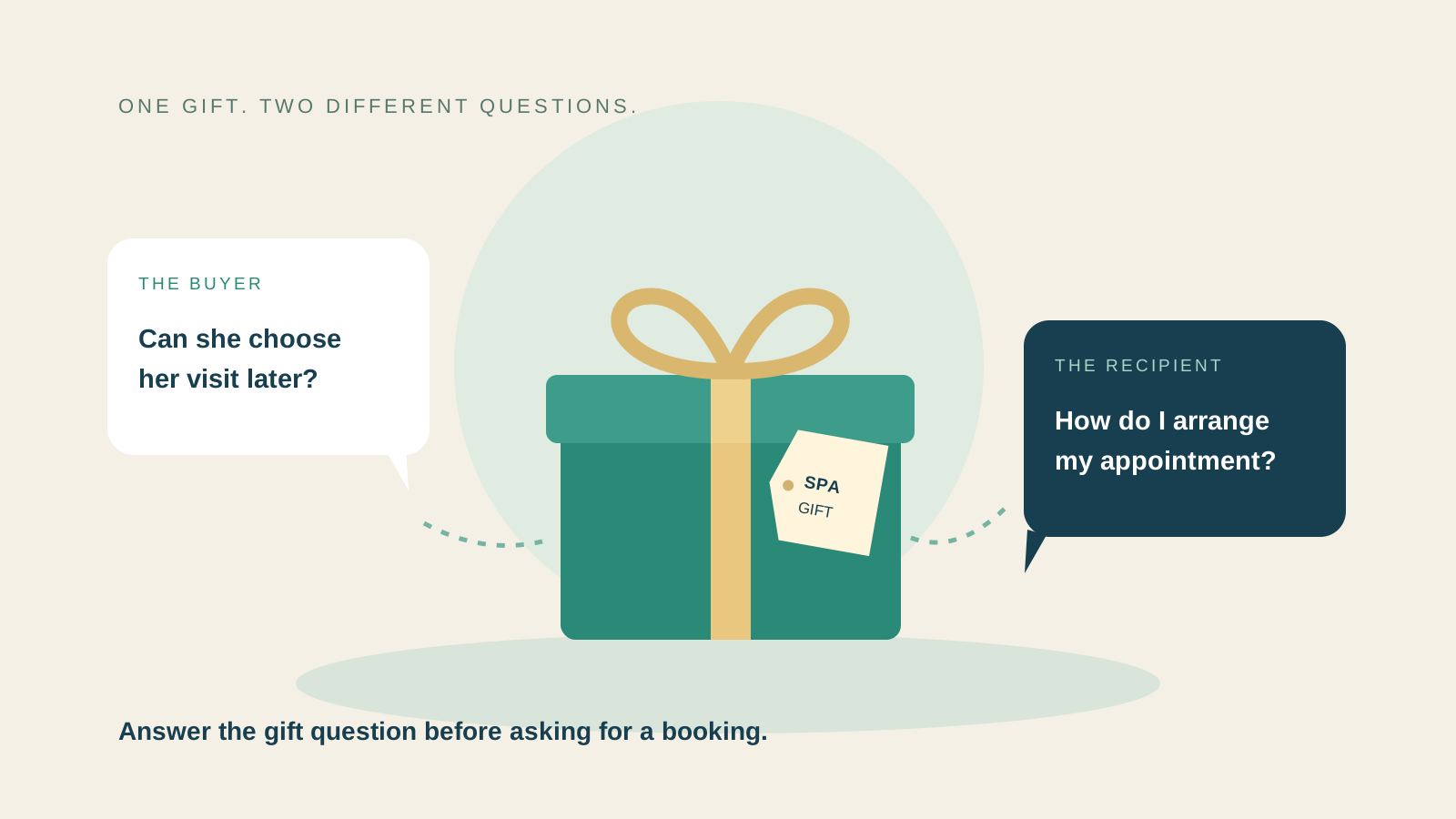
“Are you buying a gift, or do you already have a voucher you would like to use?”
The first person needs help choosing and understanding delivery or presentation. The second needs help with the voucher they hold and the next step towards a visit.
Consider these two openings:
Buyer: “Can I get a gift for my sister without choosing her treatment?”
Recipient: “My sister gave me a voucher. How do I arrange a visit?”
Sending both people a new-customer sales questionnaire adds work. Answer the question each person actually asked, using the options your business really offers.
This is a useful application of Reply.my’s FAQ assistance and enquiry qualification: provide approved information first, then gather the details that make the next staff reply useful. Qualification does not have to mean asking every customer the same questions.
A gift amount and a named experience are not necessarily the same thing
Some businesses offer a monetary-value gift, while others offer a specified service or experience. If your business offers both, explain the difference in the buyer’s terms: what choice the recipient has, where it can be used and what the gift covers.
As one real example of this distinction, Mandarin Oriental’s gift-card FAQ describes value-based and experience-based gifts with different usage arrangements. Its terms are specific to its own products, not rules for your spa.
For your business, the important point is clarity. Does the gift cover one service or contribute towards a bill? Must it be used at a named outlet? Does the recipient need to pay anything extra for their chosen option?
Do not let an attractive product name answer those questions by implication. A customer buying a “relaxation gift” may imagine something different from what reception intends to provide.
A fictional conversation that helps someone decide
Buyer: “I want a birthday gift, but I don’t know when she can come.”
Helpful direction: “You’re looking for a gift where she can arrange her visit later. I can explain the options we currently offer and their terms. Which branch would be convenient for her?”
That response is appropriate only if the business actually has such an option. If dates must be selected at purchase, explain that instead.
Buyer: “Probably PJ. Can I give it to her myself?”
The next answer should explain the business’s actual delivery choices, such as collection or an approved digital delivery process. Do not promise instant delivery, a personalised message or hidden pricing unless those options exist.
A useful note for staff might be: “Buying a birthday gift for another person; PJ preferred; wants to hand over the gift personally; delivery choice still needs confirmation.”
That gives reception a next action. It is much more useful than “Interested in spa—follow up.”
Where Reply.my can take repetitive explanation off reception
Gift enquiries can involve the same practical questions repeatedly: what the options include, participating outlets, how the recipient requests a visit and which terms apply.
Reply.my’s published packages include FAQ setup, lead qualification, customer fields and human handover. Those capabilities fit the conversation work: explain current approved information, collect relevant preferences and pass an incomplete or unusual request to staff.
For a broader multi-channel scope, the same approach can be considered across supported customer channels rather than making one employee repeat the explanation in separate apps.
The scope needs a clear boundary. Explaining a voucher is not the same as issuing it, taking payment, checking a live balance or recording redemption. Those actions require the appropriate systems and an agreed, verified connection. Do not assume they are included because an assistant can discuss gift options.
If your main concern is where customer and purchase information lives, see our AI chatbot vs CRM guide.
There are two people in the journey—keep their needs separate
The buyer may want a surprise. The recipient may later want to choose a visit. A phone number supplied for one purpose should not casually become the destination for every future message.
Ask who should receive the purchase-related reply and use your approved process for delivery instructions. Avoid collecting the recipient’s personal information before it is needed.
When the recipient contacts you, verify the voucher through the business’s normal process. A chat display name or a forwarded message alone should not determine who can access a purchase record.
Likewise, do not ask a buyer to provide another person’s medical history so AI can select a treatment. The recipient’s personal suitability questions belong with qualified staff. General service information can be explained without turning a gift enquiry into a health assessment.
The channel may change between purchase and use
A buyer might discover the offer on Instagram and ask a question through Messenger. The recipient might later contact the branch on WhatsApp, Telegram or another channel your team supports.
From each person’s perspective, they are dealing with the same business. Internally, however, these may be separate conversations about the same gift—not one customer who changed apps.
Reply.my’s multi-channel enquiry setup and handover flows are relevant when staff struggle to keep those conversations understandable. Confirm the supported channels and what context the receiving team can access.
The goal is not to automatically merge people with similar names. It is to help employees identify the enquiry correctly and avoid asking the recipient to purchase something they already received.
For a chain business, the branch that sold the gift and the outlet receiving the visit may also differ. Explain the actual participating-branch rules before the buyer pays, and keep exception requests with an authorised employee.
A thoughtful reply is not the same as a completed sale
A buyer saying “That sounds good” may still need delivery details or a staff response before they can proceed. Do not mark the enquiry complete simply because the assistant sent a description.
At the same time, avoid chasing people with generic “Still interested?” messages when your business owes an answer. Return with the missing information first.
The customer follow-up message guide gives examples of continuing a conversation without pressure. For gift enquiries, the most useful follow-up often resolves the specific uncertainty: location, inclusions, presentation or the recipient’s next step.
Review whether staff receive clearer requests and spend less time correcting expectations. Do not assume clearer replies guarantee gift sales; price, timing and the suitability of the available options still matter.
Are gift enquiries turning into long back-and-forth conversations?
Show Reply.my one anonymised enquiry in which a buyer kept asking practical questions after receiving your menu. Explain which questions reception repeats and what still needs a staff decision.
We can discuss how approved FAQ answers, relevant customer details and handover could make that conversation easier. Start with the buyer’s uncertainty, not a promise to automate every transaction.
You can view plans and pricing, then confirm your required channels, conversation scope and any separate transaction-system work.
Discuss My Gift Voucher Enquiries