
Buying Decisions
AI Chatbot vs CRM: Which Problem Does Your Business Need to Solve First?
Already have customer records but still miss enquiries? Compare AI chatbot vs CRM through real business problems, and see where Reply.my’s enquiry services fit.

Reply.my Editorial Team
Practical guidance reviewed for clear implementation steps, responsible AI boundaries and honest claims. How we prepare our guides.
“We already have a customer system. Why are people still waiting for replies?”
Your team can find a customer’s name in one place, but their latest question is sitting in Instagram. Another employee has the package details. Reception is checking Saturday availability while the customer asks again on Messenger.
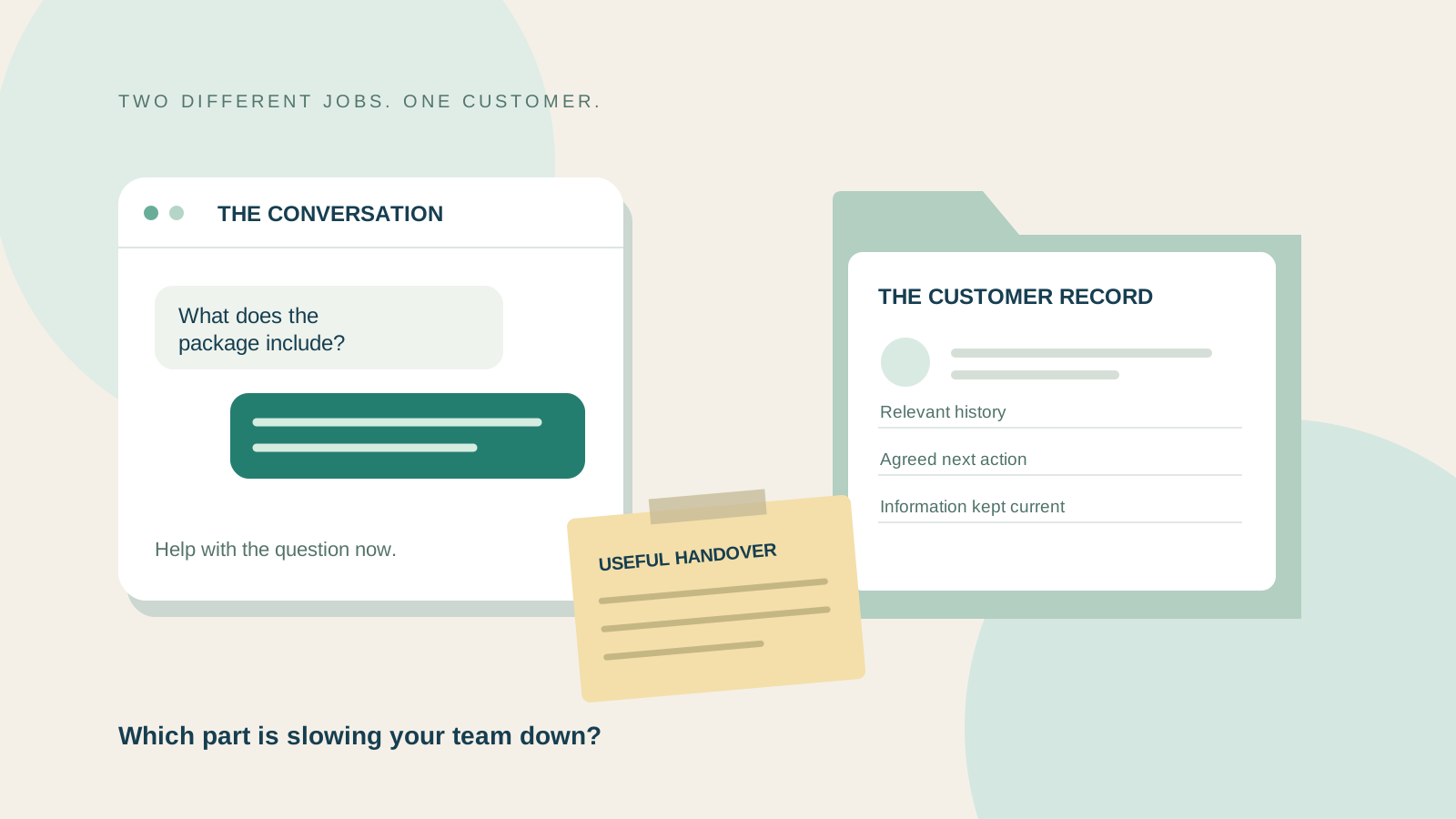
Buying more software is tempting. First, separate two problems: answering the customer who is waiting now, and keeping the information your business needs after the conversation.
An AI chatbot helps handle suitable conversations. A CRM helps organise customer relationships and records. Some products combine these capabilities, but owning one does not automatically solve both jobs.
Two owners ask for the same software. They need different help.
Consider two fictional beauty businesses. These examples illustrate buying decisions, not Reply.my customer results.
At the first, reception repeatedly answers questions about package inclusions and opening hours. The information is clear, but staff cannot keep up while serving visitors. The owner’s complaint is, “We answer the same questions all day.”
At the second, staff reply promptly but cannot reliably find what was purchased or what another branch agreed. The owner’s complaint is, “We have spoken to this customer before, but nobody knows the history.”
The first business has a conversation workload. The second has an information problem. Both may eventually need connected tools, but they should not begin with an identical shopping list.
What an AI chatbot can change during the enquiry
A customer asks what a package includes. With approved information and a suitable setup, an AI assistant can explain the relevant details and ask which branch the customer prefers if they want to continue.
That can spare reception another repeated introduction. The employee then checks the appointment options or handles a question needing judgement.
Reply.my’s published service packages describe AI FAQ assistance, lead qualification and human handover. These are relevant when the work you want to reduce happens between the customer’s first message and the employee’s useful next action.
An assistant does not become a reliable source of purchase history simply because it can hold a conversation. If the answer depends on a customer record, that information must come from an appropriate verified source. Otherwise, staff need to check it.
What a CRM should help the team remember
A CRM concerns the continuing relationship, not only the current message. Salesforce’s explanation of CRM describes systems for managing interactions with current and potential customers. The exact records and functions depend on the product.
For a service business, the buying question might be whether employees can find the relevant customer history, see the next agreed action and keep the record current. That is different from answering a pricing enquiry while reception is busy.
A record containing a name and phone number is not necessarily enough. But adding more fields is not the goal either. The information should help staff understand what the person needs and what the business has already done.
Also distinguish CRM records from booking, payment and package-balance systems. A product called CRM may not contain the authoritative appointment calendar or membership balance your team needs. Ask which system actually holds those details.
A customer asks: “How many sessions do I have left?”
This is where a polished chatbot demonstration can hide the real question.
Answering “What does the package include?” may use approved general information. Answering “How many sessions do I have left?” requires the correct person’s current record. These are not equivalent tasks.
If reception currently checks a separate system, the proposed service must explain whether that check remains manual or whether a verified connection can support it. A chatbot should not infer the balance from a previous casual message.
Nor should a display name be treated as sufficient identity verification. Access to personal purchase information needs the business’s approved checks and appropriate staff permissions.
For the owner, this is a useful distinction before paying: are you buying help with conversations, access to existing information, or a new place to maintain that information? Each addresses a different part of the customer experience.
What if you already have a CRM?
Keep what works. If employees maintain good records but routine questions still pile up, replacing the CRM may not address the delay.
Reply.my can be discussed as enquiry assistance around the work your team already does: approved answers, useful opening details and a clear handover. Its broader package lists CRM and third-party integration planning, which means the connection needs assessment—not that every existing system connects automatically.
Describe the gap in ordinary language. For example: “We know who the customer is, but staff spend too long answering opening questions before they can check the diary.” That gives the discussion a narrower and more useful scope than “We need AI.”
Ask what the employee would receive at handover and where any new details would live. If someone still has to copy information into another system, understand that remaining work before judging the value.
What if you only have chat histories and a spreadsheet?
Your immediate priority may be keeping customer work from disappearing when a shift ends. You do not necessarily need to replace every tool at once.
If one person handles a manageable workload accurately, a maintained record and clear follow-up responsibility may be enough. If several employees repeatedly search old messages, you need a more dependable way to preserve useful context.
A shared inbox helps bring supported conversations together. It is related to, but not identical to, a CRM. Customer fields and tags may help organise enquiries without replacing every record your business maintains.
Read our omnichannel inbox guide if the main difficulty is switching between apps. If the problem is incomplete information before staff can act, the AI lead qualification guide covers that part.
One customer journey may need more than one capability
Return to the customer asking about Saturday. They might discover the business on Instagram, enquire through Messenger or WhatsApp, and need an employee at a particular outlet to check availability.
The conversation needs a useful reply. The team needs enough context to continue. The booking record needs to reflect what was actually confirmed. A well-designed service connects those responsibilities without pretending they are one action.
Reply.my’s broader offering includes multi-channel enquiry setup, follow-up workflows and multiple-team routing. Discuss the actual channels your customers use, including Telegram or others where relevant, and confirm the supported connections for your plan.
Collecting a preferred time does not confirm a reservation. A CRM entry does not automatically reserve a slot either. Staff or a verified booking process must complete that action. For wider needs such as accounting, inventory or resource planning, assess appropriate business software or an ERP rather than stretching a chatbot into that role.
Before comparing prices, finish this sentence
“We need our team to stop spending time on…”
If the answer is repeated package questions, assess AI-assisted replies. If it is searching for the latest customer history, assess the records and how they are maintained. If it is working out who should reply across several apps, assess the shared conversation view and ownership.
Bring one anonymised enquiry showing that problem. Ask to see the customer’s answer, the employee’s next action and any record that changes. This keeps the discussion grounded in the work rather than a long feature list.
Compare the complete scope: initial work, ongoing charges, included channels and users, any connection work and the tasks staff still perform. A cheaper headline price is not useful if the service leaves your main problem untouched.
Do not assume that software will increase bookings on its own. First look for the observable improvement you set out to achieve: useful answers sooner, less repeated data entry or clearer outstanding work.
Tell Reply.my what your current tools are not solving
You do not need to decide the technical category before starting the conversation. Explain what you already use, where enquiries arrive and which task keeps interrupting your staff.
Reply.my can discuss where its AI enquiry assistance and handover services fit, what needs to remain with your existing systems and whether connection work should be assessed. Personal treatment decisions and other professional judgement remain with qualified people.
You can view plans and pricing as a starting point, then confirm the scope against your actual workload.
Discuss My Enquiry and Customer Record Gaps