
Spa & Beauty Operations
Spa Promotion Enquiries: How to Give Customers Clear, Consistent Answers
Customers asking different branches about the same spa offer? Learn how to clarify package terms, handle exceptions and keep promotional replies consistent.

Reply.my Editorial Team
Practical guidance reviewed for clear implementation steps, responsible AI boundaries and honest claims. How we prepare our guides.
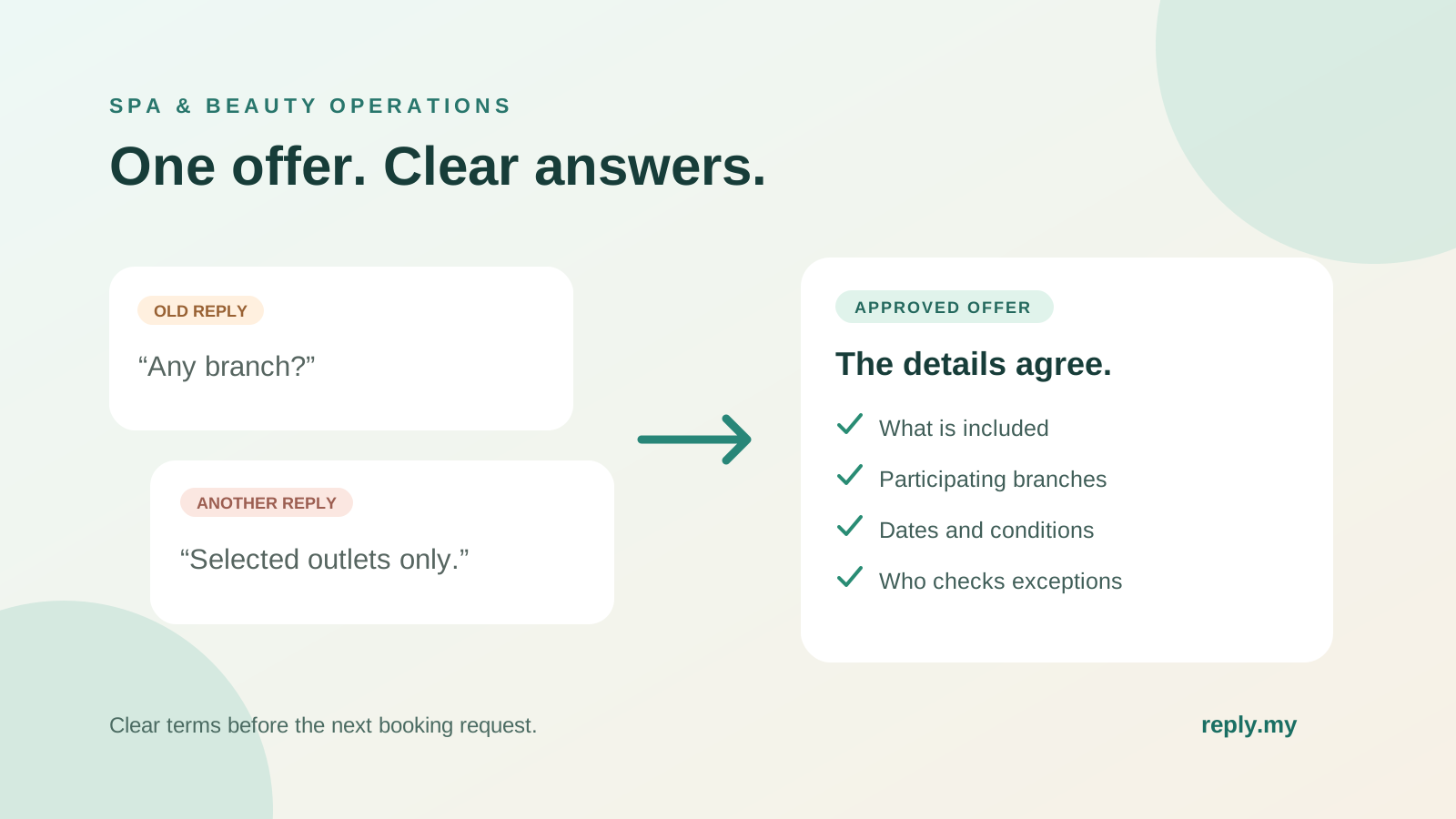
“Your Instagram post says the package is available. Why did the other branch tell me something different?”
For a customer, this is not a question about your internal communication. It is a question about whether they can trust the offer.
Spa promotion enquiries often look simple: a price, a location, a preferred day. But the answer may depend on which campaign the customer saw, whether they have visited before and where they want to redeem the service. When these details are unclear, reception spends time explaining differences instead of helping someone decide.
The solution starts before the chatbot. Your team needs a clear offer that staff and any automated assistant can explain consistently. AI can help repeat an approved answer; it should not invent the missing conditions.
The real problem may be the offer, not the speed of the reply
A quick response is not useful if a customer later discovers that the advertised price does not apply to their chosen branch.
Look at your latest campaign conversations. Are any of these happening?
- Customers send screenshots because the reply does not match the advertisement.
- Reception asks a manager the same eligibility question several times.
- Different outlets describe different inclusions for a shared package name.
- Staff still use a saved reply from an expired campaign.
- Customers learn about an important restriction only after sharing their details.
- Nobody is certain which version of the offer is current.
These are information problems. If enquiry volume is modest, a shared offer summary and updated saved replies may be enough. Buying automation before resolving contradictory terms can simply make the contradiction reach more people.
For a broader introduction to where automation fits, see our AI chatbot guide for Malaysian businesses.
Answer the buying question before asking for contact details
When someone asks “Does this apply on Saturday?”, requesting their name and phone number first creates unnecessary work. The answer may determine whether they are interested at all.
A helpful promotion reply gives the customer enough information to decide their next step: what the offer includes, whether it applies to their situation and what still needs checking.
That does not mean pasting every condition into every message. Start with the question asked. If Saturday is excluded, explain that clearly and offer a relevant alternative if one exists. Do not lead the person through a booking questionnaire before revealing the exclusion.
The same principle applies to price. If the advertised amount covers one session, do not let a customer assume it covers a package of several visits. Clear information can end an unsuitable enquiry sooner, which is a better outcome than a later dispute.
Make one offer summary that answers the awkward questions
An offer summary is a short approved reference, not another sales brochure. It should settle the details employees need when answering real enquiries.
| Offer detail | Question it should resolve |
|---|---|
| Included service | What exactly does the customer receive, and what is excluded? |
| Price and additional charges | What does the quoted amount cover? Are any required charges separate? |
| Eligible customers | Is this available to returning customers, new customers or both? |
| Participating outlets | Which branches honour this specific offer? |
| Purchase and visit periods | When must the customer purchase, and when can they use it? |
| Booking conditions | Are certain days excluded, and is an appointment required? |
| Exceptions | Who can decide a request that falls outside the approved terms? |
Purchase deadlines and redemption deadlines deserve separate wording. “Valid until the end of the month” is ambiguous if customers can buy now but visit later.
Give the summary a responsible owner. When a promotion changes, that person should make sure the advert, staff reference and automated answer no longer contradict one another. A dated document is useful only if people know it has replaced the old version.
A fictional enquiry: the answer that prevents a wasted trip
This example uses invented branches, terms and a price. It is not a real promotion, customer case study or Reply.my result.
Imagine a beauty business advertising a first-visit relaxation session for RM168. The offer is available at its PJ branch on weekdays during October. Its KL outlet does not participate.
Customer: “Can I use the RM168 offer at KL this Saturday?”
Unhelpful reply: “Yes, we have packages! Please send your name and preferred time.”
That reply sounds welcoming, but it skips both conditions that matter.
Clearer reply: “The RM168 first-visit offer is for the PJ branch on weekdays in October. It does not apply at KL or on Saturday. Would you like to consider PJ on a weekday, or ask our team about KL’s Saturday options?”
Customer: “PJ on Friday could work. Does it include a second session?”
Clearer reply: “It covers one relaxation session. If that suits you, I can pass your preferred Friday time to reception to check availability.”
The customer now understands the offer before committing more time. Reception receives a relevant request rather than having to correct an earlier promise. Collecting that request is still not a confirmed booking; confirmation requires staff or a verified booking connection to reserve the appointment.
Consistency across channels does not mean identical wording
Someone on Instagram may ask about a specific image. Someone on WhatsApp may forward an older screenshot. A Messenger enquiry may simply say “Is this still on?”
The first job is to identify the offer, not assume every person means the newest campaign. Ask for the offer name or the relevant screenshot when the context is missing. Do not assume the system can automatically retrieve every advertisement a customer has seen.
Once the offer is identified, the underlying facts should agree across the channels your business uses. A shorter message is fine; a different eligibility rule is not. The same applies to translated replies: the language can change, but the inclusions and restrictions should not.
For chains, distinguish shared campaign terms from genuine outlet differences. A branch can have different availability without having authority to rewrite the package. Questions about who continues an enquiry are covered separately in our multi-branch customer service guide.
Where an AI assistant helps—and where staff should decide
An assistant can be useful when staff repeatedly explain approved inclusions, participating branches or basic conditions. It can also collect the customer's relevant preferences after answering the initial question.
Reply.my's spa enquiry service describes answers based on business-approved information, appointment-request collection and staff involvement for unusual questions. Its listed messaging channels include WhatsApp, Instagram, Messenger, Telegram and LINE, with availability and scope confirmed during planning.
That makes promotion questions a possible use case to assess, not proof that every campaign is ready to automate. Ask how changes to an offer would be reviewed and reflected in replies. Do not assume that editing an advertisement automatically updates an assistant.
Keep exceptions with an authorised employee. A customer holding an earlier written promise, disputing an exclusion or requesting an extension needs a review—not an invented discount. Personal treatment suitability also belongs with a qualified person, not a promotional chat flow.
Measure clarity, not just the number of messages answered
For your next campaign, look for fewer corrections and less repeated explanation. Did customers receive the relevant conditions before requesting a visit? Did reception have to reverse promises? Which questions still needed a manager?
An illustrative calculation can make the workload visible. If 12 enquiries a day require four minutes of avoidable clarification over 20 campaign days, that is 960 minutes, or 16 hours. Those are planning assumptions, not measured savings. A clearer process would need to remove the extra work in practice, and released staff time is not automatically a reduction in payroll.
Do not judge success only by how many people leave contact details. Someone deciding not to proceed because an offer does not fit is different from someone abandoning the conversation because the answer was unclear.
Compare campaigns carefully: changes in advertising audience, price or available appointments can affect results independently of your replies.
Frequently asked questions
Can a chatbot decide whether to extend an expired promotion?
It should not invent an extension. It can explain approved terms and pass an exception request to someone authorised to decide. Any existing written promise should be reviewed in context.
Should every branch use the same promotion reply?
Shared terms should agree, but legitimate branch differences must remain visible. A reply can explain that an offer applies at selected outlets while availability is checked separately.
Do we need AI if we run only one campaign at a time?
Not necessarily. An approved reference and maintained saved replies may handle the workload. Consider automation when repeated questions consume enough staff attention to justify the cost and ongoing review.
What should we do when a customer sends an old advertisement?
Identify which offer they mean, explain its status clearly and check whether their situation needs staff review. Do not silently replace the old terms with a new offer or assume the customer has seen the update.
Can customers buy a package or redeem a voucher inside the chat?
Only where that transaction is supported by the agreed setup and verified systems. Explaining a package is different from taking payment, verifying a balance or recording redemption. Confirm those requirements separately.
Start with the question your team keeps having to correct
Choose one current offer and the most frequently misunderstood condition. Fix the wording in the promotion and the answer your team gives. Then decide whether the remaining workload needs saved replies, AI assistance or a person handling exceptions.
If inconsistent promotion replies are becoming difficult to manage, you can discuss your enquiry process with Reply.my. Bring an anonymised example of the question and the conflicting answers so the discussion starts with the actual problem.