
Customer Communication
Multilingual AI Chatbot in Malaysia: When Every Enquiry Waits for One Colleague
Do customer messages wait for your multilingual colleague? See how Reply.my can help with agreed-language replies and staff handover across supported channels.

Reply.my Editorial Team
Practical guidance reviewed for clear implementation steps, responsible AI boundaries and honest claims. How we prepare our guides.
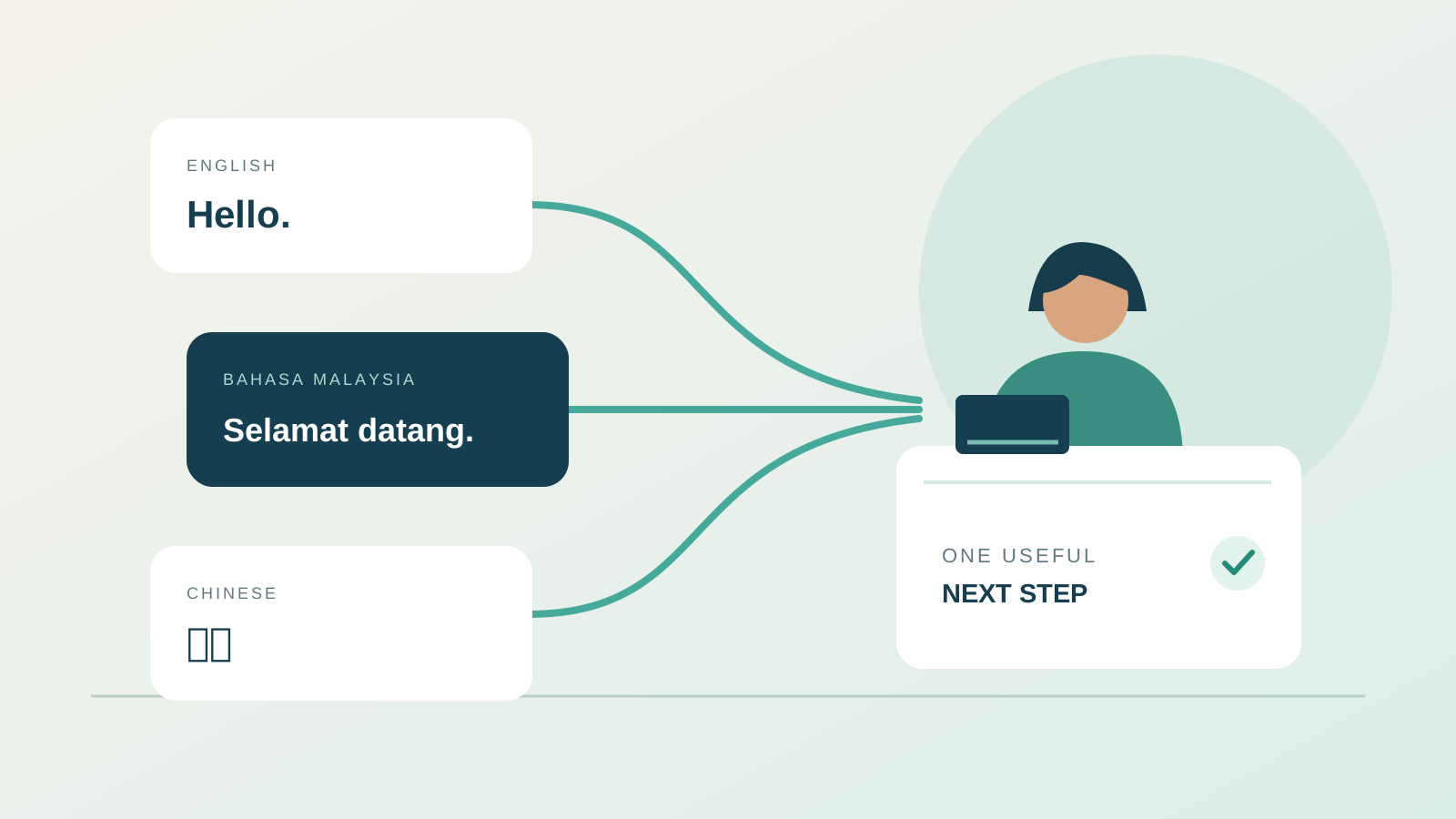
“Can you help me reply to this customer?”
The same colleague gets asked again. They are the person everyone turns to for Bahasa Malaysia or Chinese messages, even when they are already serving someone at the counter.
For the owner, the problem is not a lack of enquiries. It is that a simple customer question waits for the right language speaker to become free.
A multilingual AI chatbot for a Malaysian business can help with suitable enquiries in agreed languages. But the useful outcome is not a greeting in three languages. It is a customer receiving an accurate answer and reaching a person who can continue when needed.
The bottleneck is a person, not an app
Imagine a beauty centre receiving a message asking whether two friends can visit together. Reception understands part of it, but wants a colleague to check the wording before replying. That colleague is occupied with a consultation.
The question is not especially difficult. Yet it joins a queue that exists only in staff members’ heads: messages waiting for someone comfortable with the language.
These are fictional situations, not measured Reply.my customer results. They may nevertheless sound familiar if your team regularly forwards screenshots with “What does this mean?” or “Can you answer this one?”
Hiring another employee may be appropriate for a wider staffing need. But first distinguish conversations that genuinely need personal discussion from repeated questions about published services, locations and opening hours. The second group is where agreed-language AI assistance may reduce interruptions.
Three messages, one buying question
A customer might write “Can two of us come together?”, “Boleh datang berdua?” or “可以两个人一起来吗?” The underlying request is similar: can the business accommodate two people?
A useful response does not stop at recognising the language. It needs to understand what the business must check. Are both people requesting the same service? Which branch? Is the customer asking about a general arrangement or a particular time?
Answer any known part first, then ask the relevant next question. If simultaneous appointments need checking, make that clear rather than saying yes simply because the message was translated.
For the owner, the benefit is a more useful starting point for reception. Staff should receive a request they can act on, not three differently worded conversations that all have to start again.
How Reply.my can help without making one employee answer everything
Reply.my’s website states that replies can be configured for English, Bahasa Malaysia, Chinese and other agreed languages. Its packages also describe FAQ assistance, lead qualification and human handover.
Applied to the example, an appropriately configured assistant could explain approved service information in an agreed language and collect the relevant branch or visit preference. Staff then check the actual appointment options or answer an exception.
The value is in the combination: a suitable opening answer, useful details and a person taking over when needed. It is not a promise that every language, dialect, voice note or mixed-language message will work equally well.
Show Reply.my the messages your staff currently ask colleagues to interpret. Agree the languages, written forms and channels in scope before choosing a setup. Your own anonymised enquiries are a better starting point than a demonstration containing only “Hello”.
A reply can sound fluent and still misunderstand the customer
Consider “Can I use my sister’s package?” Translating each word does not settle whether the customer means sharing a membership, transferring a voucher or paying on someone else’s behalf.
A confident but incorrect answer can create more work for reception later. The right response may be a short clarification, followed by a check with an authorised employee.
The same applies when a customer mixes languages or uses a local abbreviation. Do not judge comprehension from a polished reply alone. Check whether the response addresses what the person meant.
Language behaviour also differs between systems. For example, Microsoft’s multilingual-agent documentation distinguishes configured languages, translated content and language switching. That is an illustration of why these details need checking, not a claim that Reply.my uses Microsoft’s product.
A practical question is: if the assistant does not understand, can it admit that and get help without making the customer repeat the same sentence endlessly?
What happens when the customer wants a person?
Suppose the opening enquiry is handled in Chinese, but the customer then asks about a disputed charge. A fluent automated greeting has not solved the next part of the conversation.
The employee who receives it needs both the relevant context and an honest way to continue. If nobody available can assist in the preferred language immediately, explain the options and actual availability. Do not imply that a language-capable employee is on duty when they are not.
In your discussion with Reply.my, separate automated language coverage from human language coverage. Ask what staff receive at handover and whether any translation or summary support is included; do not assume it.
Payment disputes, exceptions and personal treatment questions should reach an appropriately authorised or qualified person. You can explore that boundary further in our AI chatbot vs live chat guide.
Language and channel are two different preferences
A customer choosing Chinese does not tell you which app they want to use. Nor does an Instagram enquiry tell you which language they prefer.
Your team may receive multilingual messages through Instagram, Messenger, WhatsApp, Telegram or other channels. An omnichannel discussion should cover the actual channel connections alongside the agreed language behaviour.
Reply.my’s broader packages include multi-channel enquiry setup and sales handover flows. Ask how these would work together for your team: could reception continue with the original request and the customer’s stated preference?
Connecting apps does not automatically link every account to one person. Keep the customer's channel preference separate from assumptions about identity. Our omnichannel inbox guide explains the scattered-message problem in more detail.
Would this remove a real obstacle in your business?
Look at enquiries that waited for a language-capable colleague. Were they mostly repeat questions that could use approved answers, or complex discussions requiring that person’s judgement?
If repeat questions dominate, language-configured FAQ assistance may free that colleague to handle the conversations that really need them. If most messages involve sensitive complaints or professional advice, human coverage may be the more important investment.
After trying an agreed flow, look for fewer translation interruptions, fewer repeated explanations and fewer corrections—not simply more messages answered. A customer choosing not to proceed after receiving a clear answer is different from someone leaving because they could not get help.
Do not assume a specific sales increase or staff saving. The value depends on the actual workload and whether the proposed service reduces the obstacle you identified.
Which customer messages are waiting for your language expert?
Bring Reply.my a few anonymised examples: one routine question, one mixed-language enquiry and one request that needed a person. Explain which languages your team can handle confidently and where it needs support.
That makes the conversation about your reception workload and customer experience, rather than an impressive list of languages. You can also view plans and pricing, then confirm the language scope, supported channels and ongoing charges.
Discuss My Multilingual Enquiries