
Customer Experience
Customer Complaint Handling: When Your AI Chatbot Should Stop Selling
An unhappy customer needs help, not another promotion. See how Reply.my’s human handover can fit complaint handling for spas, beauty centres and service teams.

Reply.my Editorial Team
Practical guidance reviewed for clear implementation steps, responsible AI boundaries and honest claims. How we prepare our guides.
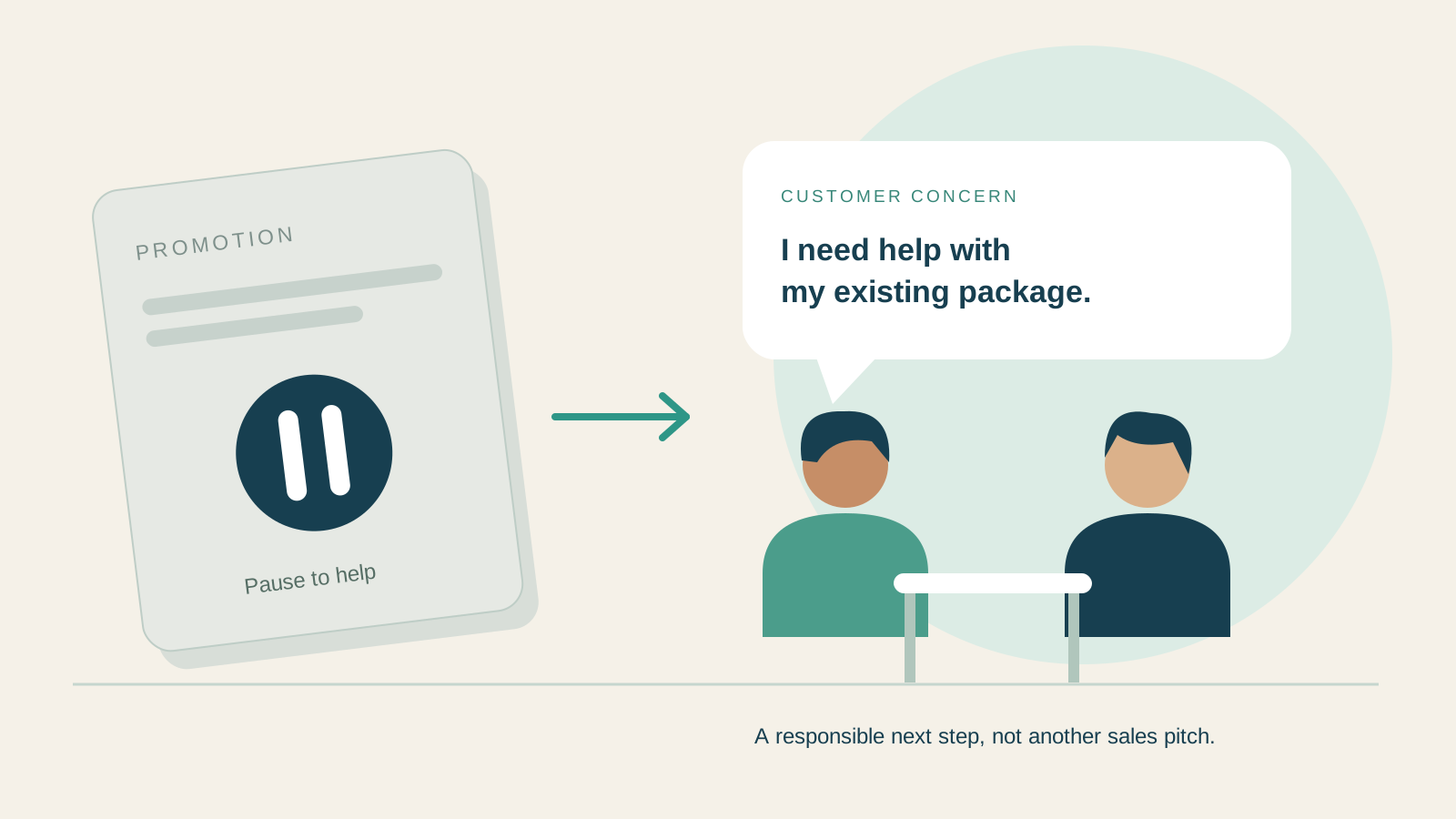
“I paid for a package, but your branch says it cannot find my purchase.”
The reply arrives instantly: “Thanks for your interest! Which treatment would you like to book?”
For the owner, this is the moment a fast response becomes the wrong response. The customer is not asking to buy. They need the business to take responsibility for something that has already happened.
Customer complaint handling with AI should help people reach appropriate assistance, not keep them inside a sales conversation. For a spa, beauty centre or chain business, the important question is whether your enquiry service recognises when the purpose of the conversation has changed.
The customer has changed the subject. Has your business noticed?
A conversation may start with a promotion and become a complaint several messages later. “Can I use this at PJ?” becomes “Your colleague already told me I could, and now I have made the trip.”
If the next reply simply repeats the promotion conditions, the customer has to explain the disagreement again. If it offers a new package, it can sound as though the business has not read the message at all.
The examples in this article are fictional and illustrate service decisions, not actual Reply.my cases or measured results.
The commercial concern is not only the possibility of losing this sale. It is the time reception and managers spend unpicking a conversation that could have reached the right person earlier. A customer who already paid should not have to present themselves as a new lead to get attention.
Read these two replies as if you were the customer
Imagine the package-record problem from the opening. The customer says they purchased at one branch and are now asking another outlet for help.
Reply that adds friction: “Please choose a package from our menu so we can assist you.”
That may be a reasonable opening for a new enquiry. Here, it requires the customer to follow the wrong process before anyone addresses the purchase they are asking about.
More useful direction: “You’re asking about a package you already purchased, and the branch cannot locate it. This needs our team to check the purchase record. I can collect the relevant booking or purchase reference for review.”
Use wording that matches what the service can actually do. Do not say the matter has been assigned or a reference verified unless that has happened. Collect only the details required through your approved process; do not request passwords or full payment-card details.
The useful change is not a more elaborate apology. It is acknowledging the actual issue and moving towards the person who can check it.
Where Reply.my fits into that change
Reply.my’s published packages include a human handover rule, customer tags and fields, and sales handover flows. Its broader offering also lists multiple-team routing and manager visibility.
Those capabilities are relevant when your current problem is that sales questions and service issues all reach the same busy inbox. Discuss how an agreed handover would distinguish a complaint, retain the useful context and direct it to an appropriate employee.
AI FAQ assistance can still help with suitable routine questions elsewhere in the queue. That gives staff a chance to concentrate on the conversation that needs investigation or judgement.
This is a use case to review with Reply.my, not a claim that its packages include a complete complaint-management system. Confirm what triggers a handover, what happens if the issue is missed and who checks that an employee has received it. Do not rely on perfect automatic detection.
The employee needs the problem, not just a notification
“Customer unhappy—please follow up” leaves the manager with another investigation before they can even begin to reply.
A useful continuation includes what the customer says happened, the relevant outlet, what they have already been told and what remains unverified. The employee should also be able to review the original messages rather than rely only on a summary.
Ask what outcome the customer is seeking when it is unclear. They may want an explanation, a record corrected or somebody to review a charge. Do not assume every complaint is a request for a discount.
The NSW Ombudsman’s communication guidance highlights acknowledging concerns, explaining next steps and communicating outcomes. These are useful communication principles here, not Malaysian legal requirements.
For a chain, one employee should remain responsible for the customer-facing update even while another branch checks information. Our multi-branch enquiry ownership guide explores that internal responsibility.
An acknowledgement is not a decision
An assistant can say that a concern needs review without deciding who was right. It should not approve a refund, invent a package extension or promise compensation merely to end an uncomfortable conversation.
Likewise, repeating a policy does not establish that the policy answers the individual case. A customer may have a different written promise that an authorised person needs to examine.
Keep investigation and remedies with staff who have the appropriate authority. For personal treatment or health concerns, the conversation needs a qualified professional; a sales chatbot should not assess symptoms or recommend treatment.
A clear, limited response is more useful than a confident answer that reception later has to reverse. The AI chatbot vs live chat comparison explains why automation and human assistance have different roles.
Do not let another channel restart the sales pitch
The same person may message Instagram after getting no useful answer on Messenger or WhatsApp. From the customer’s perspective, they are still speaking to one business.
An omnichannel approach matters because your team needs a coordinated way to find and continue supported conversations. Reply.my’s multi-channel setup and handover services are relevant to that discussion, rather than treating complaints as a WhatsApp-only issue.
However, a similar name on two apps is not proof of identity. Verify which issue the conversations concern before sharing account information or assuming they belong together.
Also look beyond the active chat. If a sales reminder is already scheduled in another system, a complaint handover may not stop it. Ask who pauses inappropriate promotional follow-ups and whether the proposed setup can coordinate that action. Do not assume this happens automatically.
Receiving “Ready to buy another package?” while waiting for a purchase problem to be resolved is avoidable friction, even if the reminder was written politely.
Would better handover make a difference for your team?
Review a few recent complaints without trying to make the numbers look impressive. Did employees have to ask the customer to repeat everything? Did a promotional reply arrive after the issue was clear? Was anyone responsible for returning with an update?
If the failure is in the service itself, messaging software cannot fix it. But if customers struggle to reach the employee who can help, better enquiry handling is a concrete improvement to assess.
Look for fewer repeated explanations and more promised updates actually delivered. Do not judge success only by fewer complaint messages: customers becoming silent does not prove they are satisfied.
For a small team handling issues reliably, clear responsibilities may be enough. Reply.my becomes worth discussing when routine enquiry work and scattered channels repeatedly interfere with those responsibilities.
Show us where the conversation stops being helpful
Bring Reply.my one anonymised conversation in which a customer needed help but kept receiving sales replies. Explain who should have taken over and what that person needed to know.
We can discuss how FAQ assistance, relevant customer details and human handover could fit your team’s workload. View plans and pricing when comparing options, and confirm the scope, supported channels and ongoing charges.
Discuss My Customer Service Handover