
Restaurant Customer Enquiries
AI Chatbot for Restaurants: Explain Minimum Spend Before the Group Arrives
Private-dining guests confusing minimum spend with a room fee or fixed meal price? Help your restaurant explain the offer clearly before the group arrives.

Reply.my Editorial Team
Practical guidance reviewed for clear implementation steps, responsible AI boundaries and honest claims. How we prepare our guides.
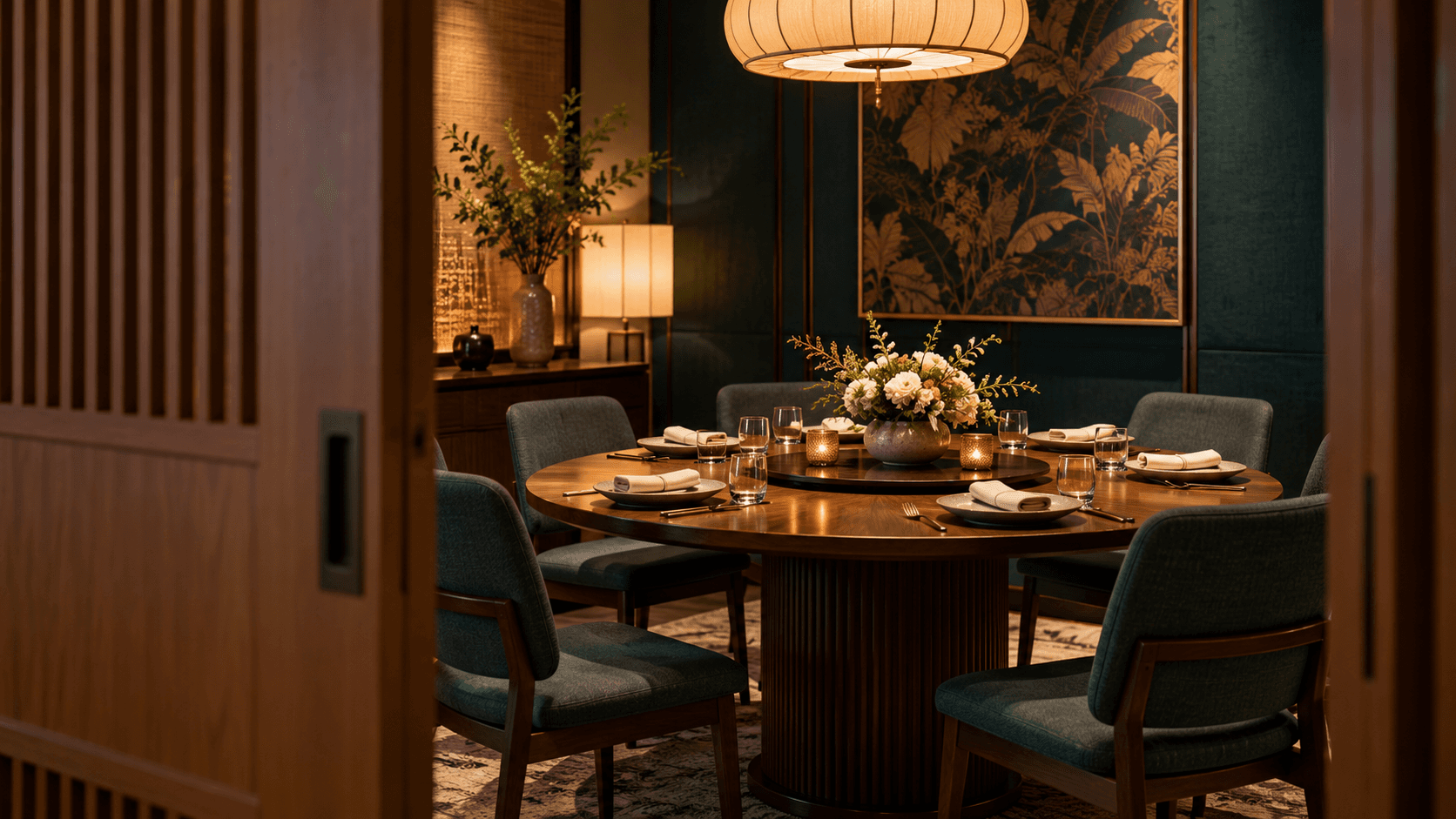
“Is that the room charge, or can we use it to order food?”
If your restaurant offers private dining, you may recognise the question. A customer asks about a birthday dinner, your team sends the minimum spend, and the next several messages are spent explaining what the number means.
An AI chatbot for restaurant enquiries can explain an approved minimum-spend policy, distinguish it from a menu price or deposit and collect the details staff need for a private-dining proposal. It should help the organiser understand the offer—not invent inclusions, calculate an unverified final bill or confirm a room that nobody has checked.
The sales opportunity is not to make the minimum look smaller. It is to make the dinner easier to plan.
A number without a spending basis creates more questions
Imagine being the family member organising a dinner for everyone else. You need to know whether the room suits the occasion, roughly what the evening could cost and what you can tell relatives before collecting their replies. A bare minimum-spend figure answers none of those questions completely.
Your restaurant may define the minimum around qualifying food and beverage purchases. Another offer might include a different combination of space, service and menu arrangements. Customers cannot safely infer your definition from an experience elsewhere.
For example, Table & Apron’s private-events page explicitly describes its minimum-spend arrangement as including space rental, labour, food and beverage. The lesson is the value of stating the basis, not that another restaurant should adopt those inclusions.
Give your own explanation where the amount appears. If the minimum applies to a particular room, meal period or date, keep those details attached to it. An accurate figure for weekday lunch can still mislead someone asking about a Saturday celebration.
“Does that mean dinner costs exactly that much?”
Not necessarily. A minimum spend is a threshold under the restaurant’s stated arrangement; it is not automatically a fixed-price menu, a spending cap or an all-inclusive total.
Explain which orders or charges count towards it and which do not. If service charges or taxes are additional, use your approved pricing information to make that visible. Do not let an assistant infer the calculation from a “++” symbol without a verified explanation.
Guests also need to understand what happens if their chosen order is below the minimum. Your business may have a specific shortfall policy or require a suitable menu selection in advance. State the actual arrangement before the organiser proceeds; do not improvise a top-up rule in chat.
The opposite matters too. Reaching the minimum does not necessarily mean every additional drink or dish is included. A customer who understands the threshold but mistakes it for a cap can still be surprised by the bill.
A useful reply is short but complete: identify the applicable minimum, the qualifying spend and what would be additional. Then offer a menu or staff-reviewed proposal that fits the intended group.
“If we pay a deposit, do we still need to meet the minimum?”
A deposit answers a different question: what payment is required at this stage, and how is it treated later? It does not by itself explain the total spending arrangement.
Entier’s FAQ describes a private-room deposit separately from its minimum-spend requirements and says the deposit is deducted from the final bill. That is one restaurant’s published policy, not a default rule for all private dining.
Your team should explain your own relationship between the deposit and the bill, along with the approved conditions relevant to the enquiry. Avoid wording that makes a deposit sound like an extra room fee if it is actually a credit against the final amount—or the reverse.
Do not ask the chatbot to negotiate exceptions, approve refunds or decide a disputed charge. It can explain current approved information and direct a question to the responsible employee. Acknowledging a payment message also does not establish that payment has been verified or that a reservation is confirmed.
For the organiser, the practical outcome is knowing what must be paid now and what remains to be settled, without having to piece that together from several unrelated replies.
The birthday dinner that looked like a per-person package
Here is a fictional example in Petaling Jaya. The people and arrangements are invented to illustrate the enquiry problem, not a Reply.my customer result or an available dining offer.
An organiser asks on Instagram about a private dinner for twelve people. Reception sends the room’s minimum spend. The organiser divides it by twelve, tells the family that dinner will cost that amount per person and assumes everyone can choose freely from the menu.
The restaurant has not actually offered a per-person package. Nor has it confirmed that the organiser’s preferred dishes, drinks and requested extras would fit that total. The conversation has produced confidence without a shared plan.
A better continuation would be: “That amount is the minimum for the room and dining period, rather than a set price per guest. Would you like the team to suggest a menu for your group and explain what is included?”
The organiser can now say whether the priority is a budget limit, a particular menu or simply having a private space. Staff can prepare the relevant answer instead of discovering the assumption when everyone arrives.
If the group becomes smaller, do not simply recalculate an implied per-person rate. Check the actual arrangement: the room minimum may be unchanged, while a selected menu might be priced differently. The team should explain any revised proposal explicitly rather than let the customer guess.
The questions worth answering before sending another brochure
You do not need a long questionnaire to make a private-dining enquiry useful. Answer the question the organiser asked, then clarify the detail that changes your answer.
These are common gaps to look for in your current conversations:
- Is the quoted amount for the requested room, date and meal period?
- Does the organiser want a private room or simply seats together in the main dining area?
- Which purchases count towards the minimum, and which charges are separate?
- Is the customer asking for a fixed menu or expecting to order individually?
- Has a deposit been confused with the minimum spend or a separate room fee?
- Does the proposed guest count still match the option being discussed?
Give the organiser one explanation they can pass on
The person messaging you often has to explain your offer to someone else. A family member, company administrator or committee representative needs more than a photograph and a price.
A useful staff-reviewed summary identifies the proposed dining arrangement, the relevant group size, the menu or ordering basis, the minimum-spend terms and the next step. Keep any unconfirmed point visible. This is not about sending every condition in the first reply; it is about keeping the conditions that affect the decision beside the offer.
An organiser who can pass on a clear explanation is less likely to return with a completely different interpretation. They can also say no sooner if the option does not suit the group, which is more useful than a long conversation built around an unsuitable budget.
Keep the wording consistent across your website and supported messaging channels. If the first enquiry arrives on Instagram and continues on WhatsApp or Messenger, the definition of the minimum should not change. The omnichannel inbox guide covers the wider coordination problem.
Separate price clarification from availability. Explaining a private-room offer does not reserve that room. Our event-venue enquiry guide addresses the distinct question of when an enquiry becomes an authorised booking.
Where Reply.my fits during a busy service
When the floor team is serving guests, routine private-dining questions can wait. Later, staff may have to reconstruct which room or price the organiser was asking about. That is the conversational workload worth examining.
Reply.my’s published packages include FAQ assistance, lead qualification, customer fields and human handover, with multi-channel enquiry setup in broader packages. A restaurant can discuss a scope that explains approved dining terms, collects the relevant occasion and group details, and passes unresolved questions to staff.
The useful demonstration is specific: ask how the service would answer “Is the minimum spend on top of the food?” using your actual policy. Then ask what the employee receives if the customer wants a different arrangement. The assistant should preserve the question, not promise a discount or invent a package to keep the conversation moving.
Confirm the supported channels and accounts in the proposal. Reply.my is omnichannel, not a WhatsApp-only service, but that does not mean every channel or operational connection is included automatically.
Live room availability, payment verification and point-of-sale calculations are separate capabilities to assess. Staff remain responsible for exceptions and for questions that approved information cannot resolve. Dietary or ingredient questions requiring a kitchen check should reach the restaurant team rather than receive guessed reassurance.
If only a few enquiries need the same explanation, clearer saved replies may be enough. If repeated questions interrupt service across many conversations, compare Reply.my’s plans and pricing with that specific workload.
Look for fewer surprises, not just more replies
Ask your team what customers still misunderstand after receiving the private-dining information. Are they clear about the spending basis? Do they know whether they have a menu proposal or only a room enquiry? Can the next employee answer without restarting the discussion?
Those questions give you a more grounded way to judge the service than counting automated greetings. Clearer replies cannot guarantee a booking or make an unsuitable budget fit, but they can help customers make an informed choice.
If your team repeatedly explains the same minimum-spend figure in different ways, bring Reply.my one anonymised conversation. We can discuss how an agreed answer and a clearer staff handover would help the organiser understand the offer before the group arrives.
Discuss My Private Dining Enquiries