
Music School Customer Enquiries
AI Chatbot for Music Schools: Do Students Need an Instrument First?
Help music students understand trial equipment, home practice and instrument purchases. A practical enquiry guide for Malaysian music-school owners.

Reply.my Editorial Team
Practical guidance reviewed for clear implementation steps, responsible AI boundaries and honest claims. How we prepare our guides.
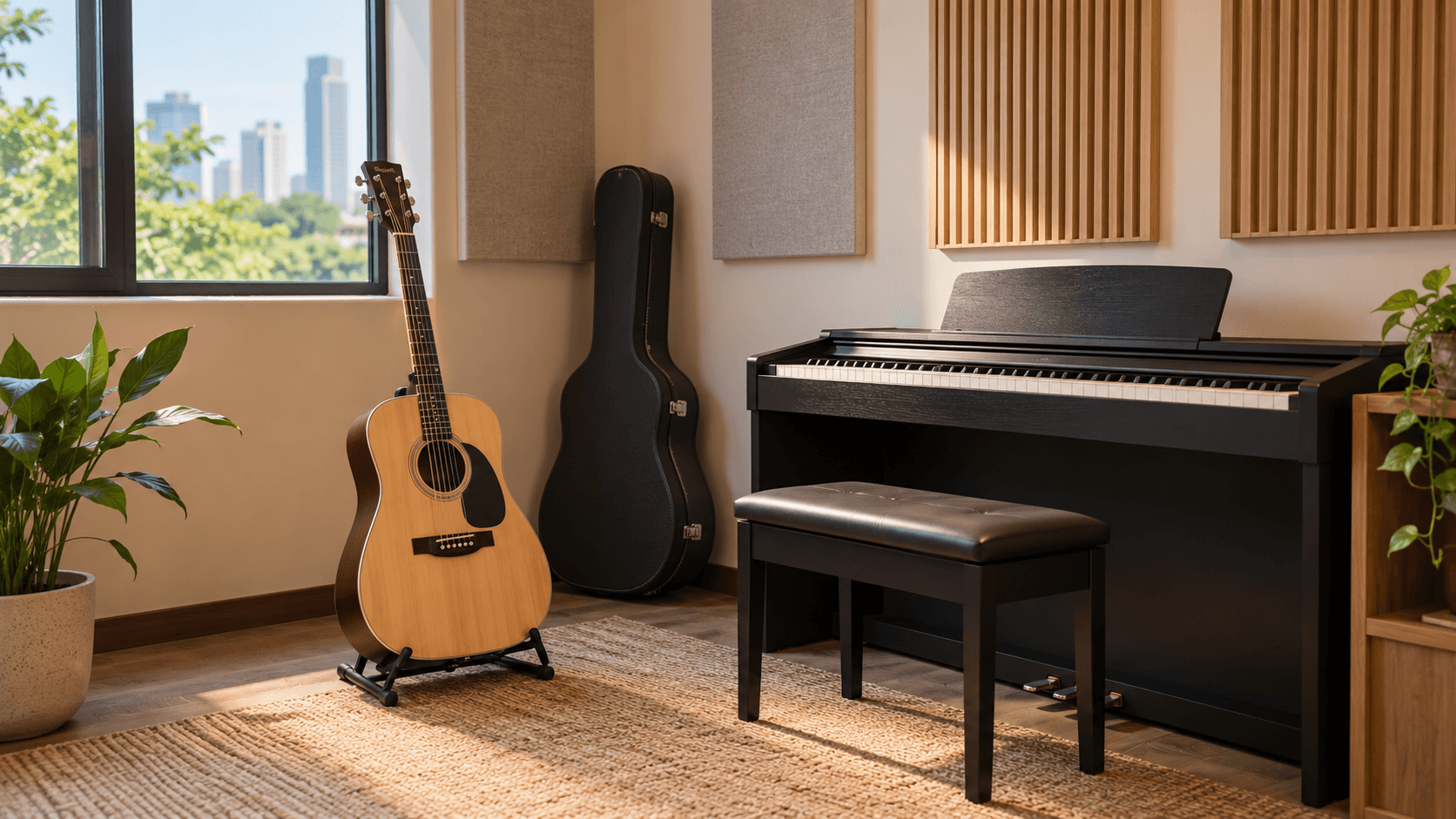
“My daughter wants to try guitar, but we haven't bought one. Can she still come?”
A music school can answer that message quickly and still leave the family confused. “Instruments provided” might describe the trial room, not something the student can take home. “You need your own” might sound like a purchase must happen before anyone has advised them.
An AI chatbot for music schools can explain the school's approved instrument arrangements, clarify which stage the learner is asking about and pass individual equipment questions to a teacher. The aim is to help someone understand what starting lessons involves—not push a purchase or promise that any instrument will do.
For Malaysian music-school owners, this is a useful question to solve before sending another timetable or enrolment form.
Provided in class does not mean available at home
The phrase “instrument provided” needs a location and a purpose. Is it available during the lesson only? Can the student use it outside class? Is there a rental or loan arrangement, and who confirms it? A reassuring two-word answer can otherwise imply a much broader offer.
Real schools explain these arrangements differently. The Academy Music Centre's FAQ says an instrument purchase is not required before starting, while recommending access to one at home as the learner progresses. Chan Academy's FAQ discusses bringing portable instruments and offers studio practice rental for piano students without a piano at home.
These are examples of the schools' own arrangements, not a universal policy or a recommendation of either provider. The useful distinction for your team is between ownership, access during lessons and access for practice.
If your school offers practice-room use, explain the relevant booking process and any separate charges. Do not let “you can practise here” sound like unlimited access at any time. If it does not offer that option, say so without making the learner feel that asking was unreasonable.
The instrument they already have deserves a proper answer
Not every enquiry is about buying something new. A learner may have a borrowed guitar, an older keyboard or an instrument a sibling used. They want to know whether it can support the lessons they are considering.
An administrator or assistant can collect the instrument type and model if the learner knows it, then explain what the teacher needs to check. Avoid dismissing it merely because it is old, or approving it merely because its name matches the course.
Questions about size, condition, setup or suitability for a particular learning path belong with someone qualified to advise. A photo may help that discussion, but it is not a reliable substitute for every check. The assistant should not infer that an instrument is playable or appropriate from appearance alone.
The customer should also know what happens next. “The teacher can advise whether your current instrument is suitable before you decide on a purchase” is useful when that is a service your school genuinely offers. “Any keyboard is fine” is a promise that could leave the teacher correcting the first conversation.
One family, two very different takeaways
Here is a fictional example, not a real school offer or a Reply.my customer result. Imagine a school that provides a guitar for its trial lesson but expects the teacher to discuss an ongoing practice arrangement with the family.
A parent writes: “She wants to try guitar. We don't own one yet. Do we need to buy before coming?”
A rushed reply says: “No need, everything is provided. Which day?” The parent may reasonably hear that equipment is included for the whole course. Nothing in the answer tells them where the promise ends.
A clearer reply says: “For the trial at our school, we provide the guitar, so you do not need to buy one for that visit. If she continues, the teacher will discuss an instrument for lessons and practice with you. Do you already have access to a guitar, or would you need advice?”
The parent replies: “My nephew has one we might borrow, but I don't know whether it is suitable.” That is the detail the teacher needs. The next conversation is about the possible borrowed instrument, not a sales pitch that starts from zero.
The improvement is the explanation of the trial's limits. It welcomes the family without implying a loan scheme, free equipment or a particular learning outcome.
Answer the spending concern without turning it into a sales pitch
“Do we have to buy one?” can mean “What are we committing to beyond the lesson fee?” Answering only with a monthly tuition amount leaves that concern unresolved.
Separate the school's charges from equipment decisions. Explain approved lesson, material and instrument-related charges where relevant, and distinguish a required item from an optional purchase. If a price needs a staff quotation, say what still has to be decided.
Do not invent a starter budget or describe an instrument as the cheapest suitable choice without a basis. A teacher can discuss requirements; a sales adviser can explain the actual options and terms. Where the school sells instruments, make the commercial offer clear rather than presenting it as the only possible way to begin.
Give the family room to think. A useful answer may help them plan a later start, arrange access to an instrument or decide that the current course is not practical. That is better than an enrolment based on an equipment expectation the school cannot fulfil.
Listen for the questions that return after enrolment
Your teachers and front desk can tell you whether this is a real problem in your school. Look for specific signs rather than assuming that every repeated question needs AI:
- New students arrive expecting to borrow an instrument that was available only for the trial.
- Teachers repeatedly explain practice requirements that the first enquiry never covered.
- A family buys equipment before receiving the advice they were told would follow.
- Different channels give different meanings to “instruments included”.
- An existing instrument is mentioned in the chat but absent from the teacher's handover.
Keep the equipment question attached to the learner's enquiry
A parent may ask on Instagram, continue on WhatsApp and later speak to a branch administrator. An adult learner may begin through website chat. The important information should not disappear just because the channel changes.
For this enquiry, a useful handover is short: interested in beginner guitar; asking about trial equipment; may borrow an existing instrument; teacher advice still needed. It gives the receiving colleague a relevant next question without turning the first chat into a lengthy registration interview.
Reply.my's scope includes FAQ assistance, enquiry qualification, customer fields and human handover, with multi-channel setup available according to the agreed plan. This is an omnichannel enquiry service, not just a WhatsApp reply tool. Confirm the channels your school needs and how staff will continue those conversations.
Do not assume automatic identity matching between different accounts, live lesson reservations, instrument stock checks or educational assessment. Those are separate requirements to verify. The guide to AI-to-human handover explains how to avoid making the customer start again.
For enquiries about a child, keep the conversation with the parent or guardian. Basic interests and equipment questions do not require identity documents, private school records or unrelated personal details.
A clearer reply may be enough to start
If these questions arrive only occasionally, a short explanation on your website and a shared reply for staff may solve the problem. Make the trial arrangement and ongoing practice discussion easy to distinguish. You do not need to automate a conversation that one person already handles well.
If several staff members repeatedly give partial answers across channels, AI assistance becomes a more useful option to assess. Ask whether it can explain your actual policy and recognise when the teacher's advice is needed—not just produce a friendly greeting.
Review a few conversations after making the change. Did the learner understand what to bring? Did the teacher receive the existing-instrument question? Were any equipment promises corrected later? These observations help you judge clarity without claiming that every enrolment came from automation.
The AI chatbot for business guide covers the broader decision. You can also review pricing against the channels and staff support your school needs.
If your team keeps explaining what “instrument provided” meant after a trial, bring Reply.my one anonymised enquiry and your current equipment policy. We can discuss how clearer answers and staff handover could support that conversation.
Discuss My Music School Enquiries