
Bakery Customer Enquiries
AI Chatbot for Cake Shops: How Many People Will This Cake Serve?
Help your cake shop clarify portions before quoting. Learn what an AI chatbot should ask about guest numbers, slice sizes and custom-cake expectations.

Reply.my Editorial Team
Practical guidance reviewed for clear implementation steps, responsible AI boundaries and honest claims. How we prepare our guides.
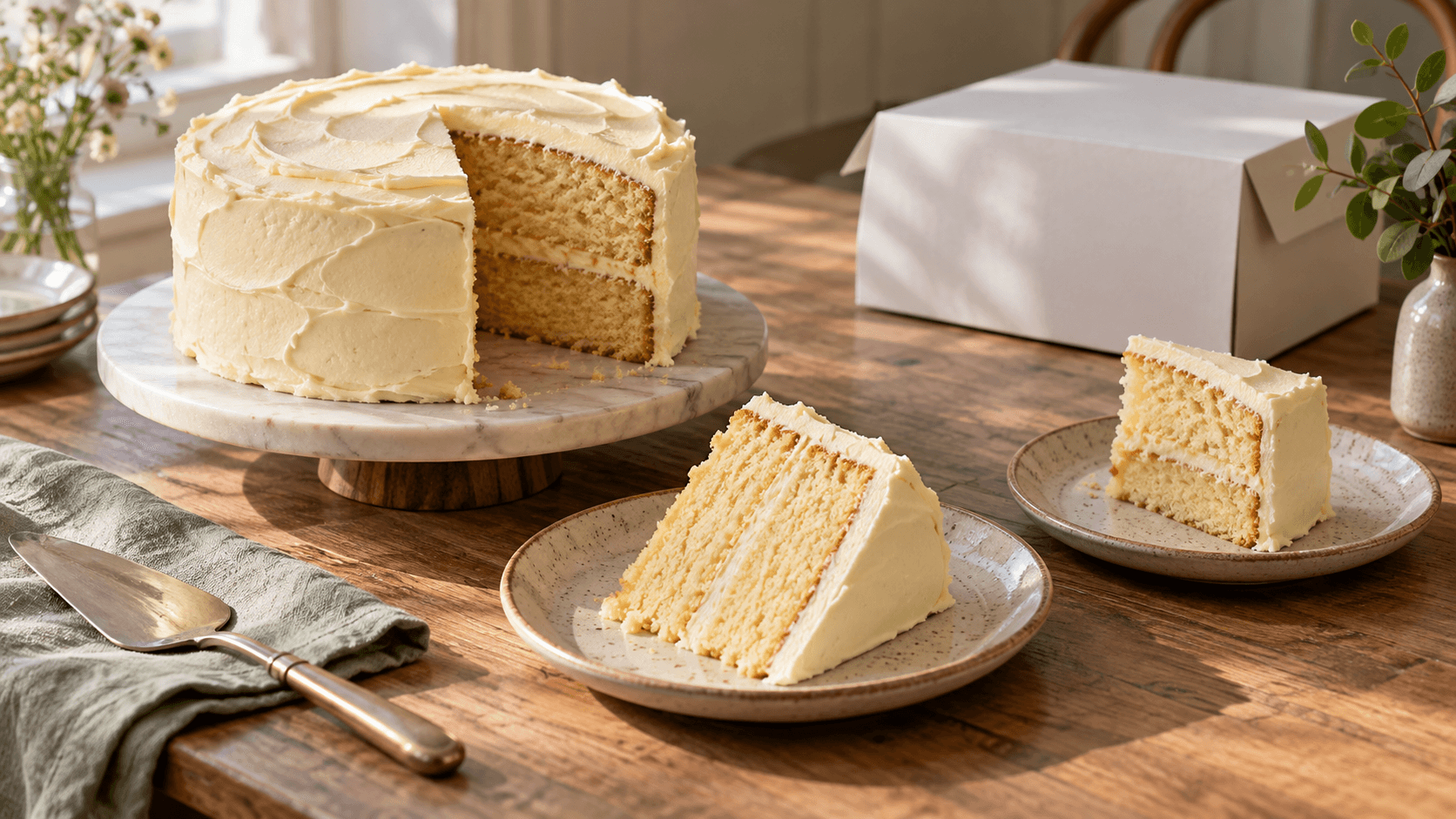
“One kilo enough for everyone?”
The customer may be picturing generous dessert slices. Your cake shop may be thinking of small pieces after a full meal. Agreeing on the weight does not resolve that difference.
For a Malaysian bakery handling custom orders, the useful first conversation is about how the cake will be served. An AI chatbot can help collect that context and explain the shop's approved guidance. It should not invent a universal number of guests per kilogram or promise a custom design before the baker has reviewed it.
Start with the plate, not the kilogram
Ask how many people are expected to eat the cake and whether it is the main dessert or a small part of a larger spread. Those questions help explain what the buyer means by enough. They do not require a full event-planning questionnaire.
Then show what your bakery means by a serving. A photograph of your usual slice beside a plate, or a simple cutting guide for the product, can be clearer than a bare number. The reference should match the cake being discussed, not an unrelated display cake.
Wilton's cake-serving guide distinguishes party portions from smaller wedding portions and notes that shape and cutting affect servings. It treats its figures as guidance rather than guaranteed results. The lesson for your shop is to state the portion assumption, not to copy a chart into every quotation.
Weight may be useful within your own product range, but it should not become a universal conversion rule. Ask the baker to approve the serving guidance for each relevant size and style. Where the requested cake falls outside that guidance, collect the details and leave the recommendation open.
A considerate opening could be: “How many people will be having cake, and are you planning small celebration pieces or dessert-sized slices?” Follow with the shop's actual options once the answer is clear.
Three questions that make a size recommendation more useful
Keep the exchange short enough that the buyer can answer it on a phone. You can gather additional details later if they choose to proceed.
- Who is the cake for? Ask for the number expected to eat it, not just the total number invited to the event.
- How will it be served? Clarify whether the buyer wants small pieces alongside other food or a substantial dessert portion.
- What must the cake do visually? Check whether a particular height, shape or display effect is important, so the baker can review that alongside the serving request.
A birthday enquiry with two different meanings of enough
This fictional example illustrates the conversation. The guest numbers are invented; it is not a customer result, price offer or cake-size recommendation.
A customer in Shah Alam asks for a one-kilogram cake for eighteen people. A quick reply confirms that the requested weight is available and sends a payment instruction. Nobody has asked whether the cake is the main dessert.
In a clearer exchange, the assistant asks about the portions. The customer explains that everyone is expecting a proper dessert slice, including a few people who would like a second piece. That is a different brief from eighteen small ceremonial portions.
The assistant records that expectation and asks staff to recommend from the bakery's own range. It does not calculate a new weight from an invented rule. If the baker proposes another size, the explanation should connect it to the serving plan rather than simply call it an upgrade.
The customer may prefer to adjust the decoration budget, consider a simpler cake or keep the original size with smaller portions. Those are choices to discuss honestly, not reasons to push a larger order. If the budget and portion expectations cannot both be met, explain the trade-off before accepting the order.
The useful handover is “eighteen dessert portions, possible seconds, size awaiting baker's recommendation”. “Birthday cake, one kilo” loses the reason the customer asked for help.
Keep the serving answer separate from the design answer
A reference picture can communicate a colour or style, but it cannot settle how much cake the customer needs. A striking tall design and a straightforward cake for sharing may call for different conversations with the baker.
If someone asks for the pictured design in a smaller size, do not promise that every detail will look identical. Ask staff what can be offered and explain the proposed version. The assistant should not infer dimensions, edible content or structural feasibility from the image.
Keep the agreed serving basis visible while the design is discussed. Otherwise, a customer can spend several messages choosing colours and wording, only to discover that the quote refers to a size that no longer matches the original gathering.
The quotation should identify the actual product or baker-approved custom specification, its stated serving guidance and the assumption behind it. Where relevant, distinguish decorative elements from the cake intended for serving using the bakery's own explanation.
Receiving a reference image is not design approval. Likewise, collecting a date is not a production reservation. Staff should confirm what the bakery can make and when, using the shop's actual order process rather than letting an encouraging chat sound like a completed booking.
Give the person cutting the cake something usable
The buyer is not always the person who will portion the cake. An office administrator might place the order while a colleague serves it. A family member may collect it and another person takes charge at the celebration.
If your serving guidance depends on a particular cutting approach, provide the bakery's matching instructions with the order. A customer who sees only a guest count may reasonably cut the familiar way and get a different result.
Explain the estimate plainly: these portions follow this guide, and larger pieces mean fewer servings. Avoid language that sounds like a guarantee that every guest will be satisfied regardless of how the cake is cut.
Do not turn the chatbot into a source of improvised food-storage or handling advice. Use the bakery's verified instructions for the specific product and hand uncertain questions to staff. Ingredient, allergy and dietary-suitability questions also need reliable staff review; a product name or photo is not enough to make a safety assurance.
The goal is not to overload the first enquiry with every instruction. Give the customer the size information needed to choose, then make sure the relevant confirmed guidance reaches the person receiving the cake.
What to prepare before asking AI to help
Begin with a small set of approved product notes. For each commonly requested cake, record how your team describes the size, the serving estimate and the portion assumption. Mark custom requests that require a baker's decision instead of trying to cover every possible design.
Review the wording with the people who actually make and sell the cakes. If one employee says a product serves ten and another says twenty, find out whether they mean different slices before putting either answer into an automated flow.
An enquiry assistant can then explain the approved range and ask the missing question. When there is no applicable guidance, it should say that staff need to advise. An empty answer is not permission to borrow a number from an unrelated cake online.
Test the flow with an uncertain customer: “Not sure, maybe twenty people, and there will be other desserts.” A helpful response keeps the uncertainty visible and asks only what helps the next decision. It should not turn maybe into a final order quantity.
If your shop only receives a few such questions, a clearer menu and a shared reply may be enough. Consider assistance when repeated explanations across a busy inbox regularly delay useful conversations—not simply because an AI feature is available.
Where Reply.my can support bakery enquiries
Reply.my's published capabilities include FAQ assistance, enquiry qualification, customer fields and human handover. Within an agreed setup, these can help a bakery explain approved product information and pass the buyer's serving expectations to staff.
Think omnichannel, not WhatsApp-only. A customer might discover a cake through social media and continue the enquiry through another supported channel. Confirm which channels and accounts are included, and how staff will continue the request without assuming that similar profile names prove the same identity.
Do not assume this scope includes automatic cake sizing, image-based design assessment, production scheduling, live stock or payment confirmation. Those functions need separate verification. The assistant can still be useful by preserving the question the baker needs to answer.
Our human-handover guide explains how to avoid asking the buyer to start again. For a wider view of enquiry assistance, see the business chatbot guide. Review pricing against the channels and support you actually need.
If your team keeps revising cake quotes because “enough for everyone” meant different things, bring Reply.my an anonymised example. We can discuss the questions and approved explanations that would make your next cake enquiry easier to complete.
Discuss My Cake EnquiriesCommon questions about cake-shop chatbots
Can an AI chatbot recommend a cake size?
It can explain the bakery's approved serving guidance and collect the customer's portion expectations. Custom or uncertain cases should go to staff rather than an invented weight-to-guest formula.
Should a cake shop quote by weight or guest count?
Use the bakery's actual product and pricing system, but clarify both the size being sold and the portion assumption behind any serving estimate. Neither an unexplained weight nor an unexplained guest count is a complete answer.
Can a reference photo confirm a custom cake order?
No. Staff need to review the proposed design, specification and production availability. Receiving an image or preferred date does not mean the bakery has accepted the order.
Does Reply.my include automatic cake design or production scheduling?
Do not assume those functions are included. FAQ assistance, enquiry qualification, customer fields and human handover can support the conversation; specialist functions require separate confirmation.