
Coworking Business Enquiries
AI Chatbot for Coworking Spaces: Sell the Right Working Day, Not Just a Day Pass
A day-pass customer may need calls, guests or a private room. Help your coworking team clarify the visit before selling access that does not fit.

Reply.my Editorial Team
Practical guidance reviewed for clear implementation steps, responsible AI boundaries and honest claims. How we prepare our guides.
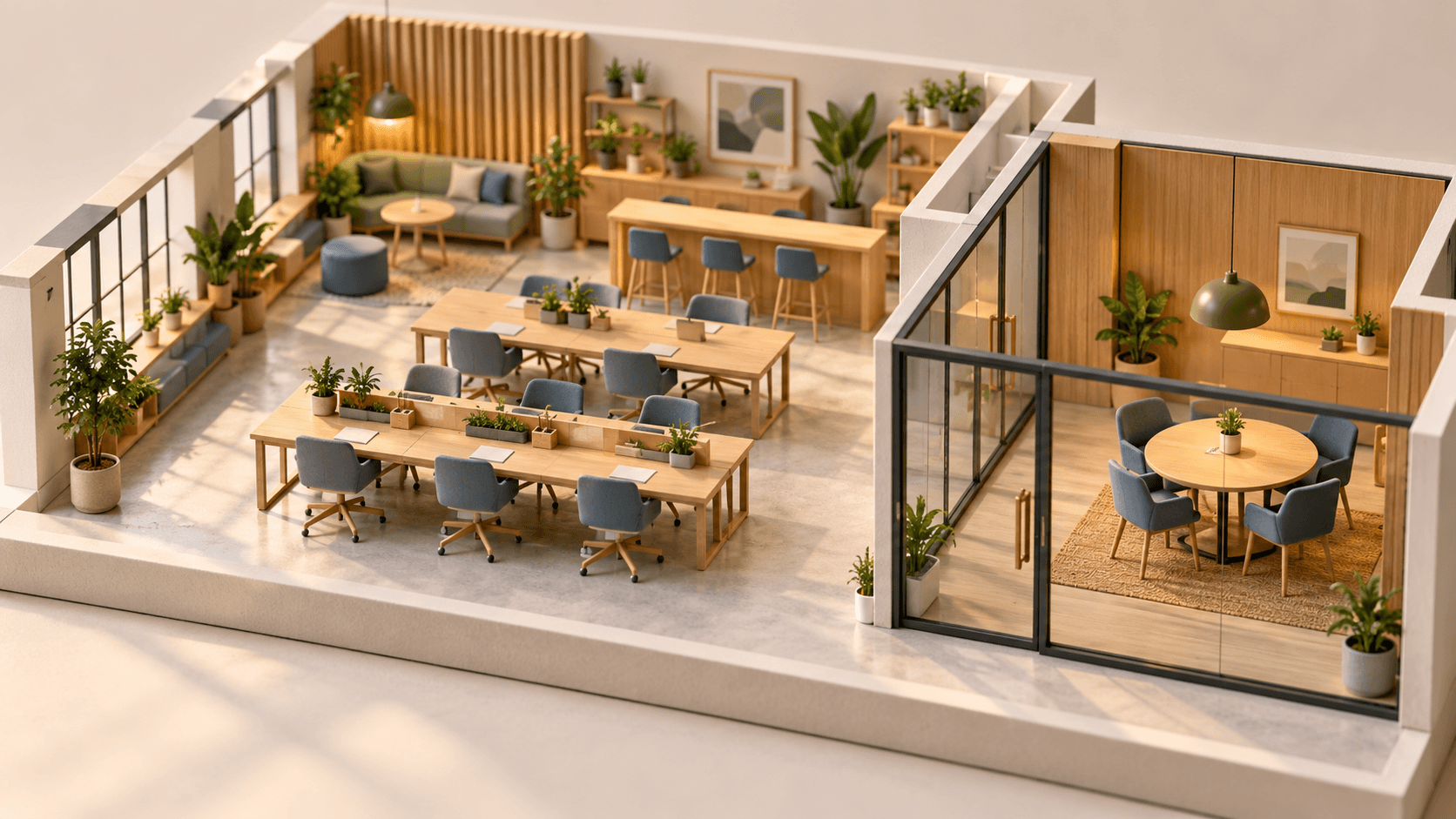
Your day-pass customer arrives with a laptop—and a client who expects a private meeting. Reception has a desk available, but the meeting rooms are occupied. The customer remembers asking whether they could ‘work here for the day’. Your employee remembers sending the day-pass price.
Nobody deliberately misled anyone. They simply pictured different working days.
An AI chatbot for a coworking space can help explain the difference between shared workspace access and a room reservation, clarify what a visitor needs and pass unresolved requests to your team. It should help people choose the right option—not assume that a day pass includes every facility shown in your photos.
The question behind ‘How much for one day?’
Price matters, so answer it when your approved information allows. But one short follow-up can reveal whether you are discussing the right product: ‘Will you mainly be working on your own, taking calls or meeting other people?’
A person writing quietly between appointments may need something different from a consultant hosting a client. Two colleagues sitting near each other may not need a private room, while one person conducting confidential interviews might. Headcount alone does not tell you the required setting.
This distinction exists in actual Malaysian offers. For example, WORQ's day-pass page distinguishes hotdesking access from chargeable meeting rooms and directs users hosting guests towards a meeting-room booking. That is an example of one operator's terms, not a rule for every coworking business or a claim that it uses Reply.my.
Explain your own inclusions. The useful answer is not a long comparison of every membership you sell. It is enough information for this visitor to recognise whether the advertised pass suits the day they have planned.
‘I have video calls all afternoon’
A visitor seeing a phone booth in your gallery may assume it is theirs to use whenever needed. Before encouraging the purchase, explain how booth access actually works at that location: any booking requirement, usage limit or availability condition.
Do not describe an open desk as a private call space. Likewise, a booth that exists somewhere in the building is not necessarily available throughout the customer's visit. If uninterrupted private space is essential, let your team discuss an appropriate option rather than promising that something will turn up.
Ask about the working requirement, not the content of the calls. ‘Do you need an enclosed space for the full afternoon?’ is more useful and less intrusive than requesting information about the customer's clients or conversations.
An assistant can explain approved access rules. It should not certify soundproofing, confidentiality or suitability for a sensitive discussion without reliable grounds. A confident description cannot replace an honest explanation of the actual space.
‘My client will only stay for an hour’
A short visit is still a guest visit. Explain whether your pass permits it and whether the customer needs a room or a separate guest arrangement. Do not treat ‘only an hour’ as automatic permission.
The customer's real concern may be simple: they want to avoid inviting someone to a place where they cannot meet. Help them understand the relevant option, the requested time and what remains to be confirmed.
If a meeting room is appropriate, distinguish the room enquiry from the desk purchase. A customer who has bought desk access has not necessarily secured a private room. If your product does bundle room use, explain the actual allowance and reservation conditions instead of suggesting unlimited access.
For an owner, this is not merely a chance to sell a more expensive product. It is a chance to prevent an unsuitable purchase. Sometimes the honest answer will be that your space cannot support the visit at the requested time.
‘I thought I could stay until my evening meeting’
Building hours, member access and day-pass hours can describe different things. A website photograph of people working late, or a general reference to round-the-clock access, should not override the terms of the product being discussed.
State the applicable hours for the pass, date and location. If the visitor's plan extends beyond them, explain which options your team can actually offer. Do not borrow a monthly member's access privileges to reassure a one-day visitor.
A clear answer also separates arrival from departure. Someone planning to arrive late needs to know whether check-in is available, not just whether the building remains open. Reception should not discover that mismatch when the visitor is already outside.
For multiple locations, keep the answer tied to the requested outlet. The same brand name does not establish identical staffing, visitor procedures or facilities at every address.
A working day described properly
This fictional example describes an invented coworking enquiry in Malaysia. It is not a client case study, an actual offer or a measured result.
Daniel writes on Messenger: ‘Can I get a desk tomorrow? I have a client meeting at two.’ A price-only reply would leave the most important part of the message unanswered.
A better conversation explains the shared-desk offer, then clarifies whether the client meeting needs private space and how long it is expected to last. Daniel says he needs privacy for an hour but will work alone for the rest of the day.
The community team can now check a room option alongside the day pass. If the preferred room is unavailable, it can offer a genuine alternative or explain the limitation before Daniel invites his client. The assistant should describe an unconfirmed request as exactly that.
If Daniel continues on WhatsApp, the next employee needs both parts of the visit: individual work and the private meeting request. ‘Interested in a day pass’ discards the reason the enquiry required attention.
The improvement is not more questions or a longer chat. It is a buying decision based on the day Daniel actually needs, followed by a welcome that matches what he was told.
Where Reply.my fits into the community team's day
Reply.my's published offering includes FAQ assistance, enquiry qualification, customer fields and human handover. An agreed coworking scope could use these capabilities to explain approved pass inclusions, clarify visit requirements and pass room or access exceptions to staff.
Reply.my is positioned as omnichannel, not WhatsApp-only. Visitors may enquire through Instagram, Messenger, Telegram or other channels as well as WhatsApp. Confirm supported accounts and the channels included in your proposal. The omnichannel inbox guide explains the team workload created by scattered conversations.
The useful handover is specific: the requested location, the planned visit, the need for privacy or guests, and the question that still needs an answer. It should not quietly promote a preferred time into a confirmed reservation.
Live room availability, access-control credentials, membership balances, payments and booking-system connections require separate verification. FAQ assistance does not establish those capabilities. Do not assume connecting inboxes automatically identifies the same person across different accounts either.
Ask for a demonstration using an awkward but ordinary enquiry, such as a day-pass visitor who needs a client meeting after normal pass hours. Watch whether the assistant explains the limit and whether the human handover gives your team enough context to help.
Find the expectation reception keeps having to correct
Ask your community team which sentence they repeat at check-in: ‘That room needs a reservation’, ‘This pass is for this location’, or ‘Guest access works differently’. Those corrections can reveal information that belongs earlier in the enquiry.
Some gaps need a clearer product page, not new software. If the same misunderstanding is reaching staff repeatedly across several channels, consistent approved answers and better enquiry handover may help. Automation should support that clarity rather than reproduce an ambiguous sales description faster.
Review whether visitors arrive with the right expectations and whether staff can find the unresolved requirement. A fast reply that sells the wrong pass is not a useful success measure.
If your team spends more time correcting day-pass assumptions than helping visitors settle in, share an anonymised enquiry with Reply.my. Discuss how the routine explanation could be handled and where your community team should remain involved. The plans page provides a starting point for comparing scope.
A good workspace enquiry leaves the visitor knowing where they can work, what they can use and what has actually been reserved. That is a more convincing reason to choose your space than a generic promise of flexibility.
Discuss My Workspace Enquiries