
Bridal Boutique Enquiries
AI Chatbot for Bridal Boutiques: Rent, Buy or Custom?
Bridal customers may mean rental, purchase or custom when asking for a gown price. Learn how clearer enquiries help your boutique prepare a more useful consultation.

Reply.my Editorial Team
Practical guidance reviewed for clear implementation steps, responsible AI boundaries and honest claims. How we prepare our guides.
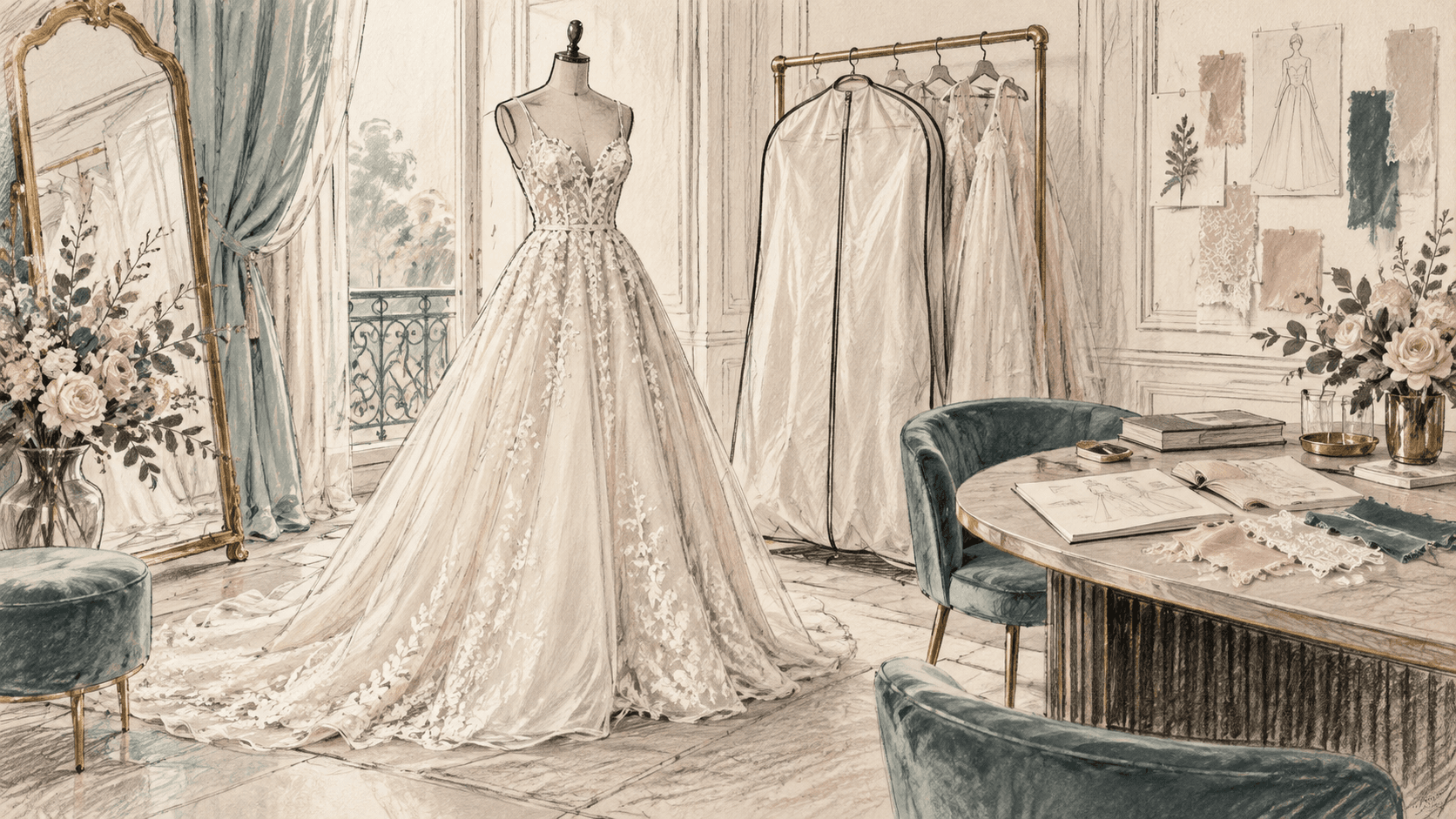
A bride sends a gown photo and asks, ‘How much is this?’ Your consultant gives the rental price. Three messages later, she explains that she wants to keep the dress. Both people have been discussing the same gown—but not the same purchase.
For a bridal boutique, that misunderstanding can follow the customer into the showroom. A visit intended to explore a made-to-own dress becomes a conversation about rental terms. Staff spend the appointment correcting expectations instead of helping someone choose.
An AI chatbot for a bridal boutique can help clarify whether a customer wants to rent, buy or explore a custom option before discussing the relevant package. The useful outcome is a better-informed consultation, not an automated decision about fit or availability.
The missing question behind ‘How much?’
A price request is not necessarily a request for your cheapest package. The customer may be comparing dresses, planning two ceremonies or deciding whether keeping the gown matters to them. A useful reply answers the price question in its proper context rather than immediately asking for a phone number.
When the preference is unclear, ask: ‘Are you considering renting a gown, buying one to keep, or exploring a custom option?’ If the customer already says ‘I want to rent this for my reception,’ acknowledge that instead of asking them to choose again.
Someone who is undecided still deserves help. Briefly explain the options your boutique actually offers, then let them explore. Treating ‘not sure yet’ as an unqualified lead can turn a reasonable early-stage question into an uncomfortable sales conversation.
The distinction is real, but it is not identical across boutiques or collections. Wedding Isle describes rental, ready-to-wear and custom options, with different arrangements across its collections. That illustrates why a general statement such as ‘all our dresses can be rented’ needs checking against your own current offer.
Custom-made does not answer the ownership question
‘Custom’ describes something about how an outfit is made or adapted. It does not, by itself, tell a customer whether they keep it. A boutique that offers custom rental and made-to-own services needs to distinguish those options in ordinary language.
For example, PP Signature's website distinguishes Sewa Baru and Hak Milik options. These are that business's offering labels, not universal industry terms. Your own assistant should explain your approved arrangement rather than assume that every custom enquiry means a purchase.
Consider what happens when a bride mentions a second celebration in another city. She may need a longer rental arrangement, two outfits or a gown she owns. Those are questions for discussion, not a reason for the assistant to select a package on her behalf.
Keep the explanation short: whether the gown is returned, what design choices are available and which decisions require a consultant. Detailed tailoring promises, fabric substitutions and completion dates should not be improvised in a chat reply.
Make the price understandable without sending a wall of terms
A bare amount invites customers to fill in the gaps themselves. One person assumes accessories are included; another expects unrestricted alterations. A concise explanation of the relevant offer can prevent that misunderstanding without turning the first reply into a contract.
For rental, clarify the applicable rental period and which inclusions or additional charges the customer should discuss. For purchase, explain whether the quoted item is an existing gown or a custom order. Use your actual approved terms; cleaning, alterations, accessories and deposits are not automatically included everywhere.
If the price is a starting figure, say what it refers to and why the final quote may differ. Do not present a minimum as the price of the photographed gown unless that has been established. Equally, avoid replying ‘contact us for price’ when you already have approved information that would answer the question.
When a customer compares two options, a simple side-by-side explanation is often more helpful than another promotional paragraph: what they receive, whether they return it and what still needs confirmation. The purpose is to make the choice clearer, not steer everyone towards the highest-priced package.
An expired promotion needs an honest answer too. Staff should be able to check whether an alternative is available. Repeating an old advertisement's price as a current promise creates a problem the showroom team must later undo.
A better conversation before the showroom visit
This fictional example illustrates a Malaysian bridal enquiry. It is not a customer testimonial or a measured Reply.my result.
Nadia sends an Instagram photo of a gown and asks about the price. She is planning a ceremony in Kuala Lumpur and another celebration with family elsewhere. She likes the style but has not decided whether to rent or buy.
Instead of sending the rental package alone, the boutique explains the available ownership options and asks which she is considering. Nadia says keeping the dress might be useful because the celebrations are on different dates. That changes the consultation: she needs to compare an appropriate rental arrangement with buying, not simply choose a fitting slot.
The consultant receives the original style reference, the two-event context and the fact that ownership is undecided. The appointment can begin with those choices. Nadia does not have to defend a purchase preference after being guided through a rental-only conversation.
There is no guaranteed sale in this example. A useful outcome might be discovering that the boutique does not offer what Nadia needs. Clear expectations help both sides decide whether a visit is worthwhile.
Let the consultation remain personal
Bridal shopping involves comfort, taste and practical concerns that a chat cannot fully resolve. An assistant can explain a collection and prepare context; it should not declare that a silhouette will suit a person's body or promise a fit from a photograph.
Avoid unnecessary personal questions in the opening conversation. A customer exploring rental versus purchase does not need to submit body photographs or detailed measurements just to understand the options. When measurements are genuinely needed, let the boutique explain its appropriate process and why the information is requested.
Separate the wedding date from the intended visit date. Knowing when the event takes place helps a consultant assess the discussion, but does not prove that a specific gown is available or that alterations can be completed. A reliable availability check and a staff decision are different from recording a date.
If the customer asks to speak to someone, make that route clear. A human handover should carry the question and preferences forward, including anything still undecided. Staff should not receive a confident summary that erases the customer's uncertainty.
Where Reply.my can help your boutique
Reply.my's published offering includes FAQ assistance, customer fields and human handover. For a bridal boutique, those can form an agreed enquiry-handling scope: explain approved package information, retain the customer's stated preference and help a consultant continue the discussion.
This is an omnichannel conversation, not only a WhatsApp problem. A customer may discover a gown on Instagram and ask further questions through another supported channel. Discuss the accounts and channels included in your proposal; do not assume every channel or cross-channel identity match is available automatically. The omnichannel inbox guide explains the broader coordination problem.
Live gown inventory, fitting-calendar access, payments and custom-order tracking need separate confirmation. An enquiry assistant should not be described as an inventory or tailoring system unless those capabilities have actually been agreed and verified.
Start the discussion with a real, anonymised enquiry where rental and purchase were confused. Ask Reply.my to show how the customer would receive a clearer explanation and how your consultant would receive the context. You can also review the available plans quietly before deciding whether the scope fits your boutique.
If your team already handles these conversations comfortably, a clearer package explanation may be enough. If the same misunderstandings keep arriving across several inboxes, that is a specific problem worth discussing.
Discuss My Bridal Enquiries